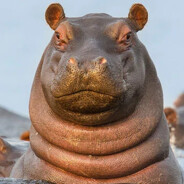

Oh yeah, that’s the new hexadecimal IPV8
IPv5.
I think you mean IPV0x08
I try to avoid “this” style comments, but I genuinely don’t know how else to respond to this one. It was hilarious. I literally (by which I actually mean “literally”) laughed out loud.
Hello, I am apparently an idiot. What is wrong with that IP address that people can tell it’s an immediate phishing scam?
IP addresses can’t have segment numbers going over 255.
Yeah, IPv4 addresses use four bytes. Those four bytes are represented as four decimal numbers, separated by dots. And a byte can only represent the decimal values 0–255.
Ahhhh. Thank you. Now the Ipv over 4 jokes make sense.
wait what? I feel like I am left behind in the tech. I only know about ipv4 and ipv6 😭😭😭
They’re making a joke. The numbers in the IP are way too high for v4, but the format isn’t v6, so it’s a “new range” of v8.
Where’s IPv7?
at 192.512.512.10.0/42.
In the drawer right next to IPv5
IPv4 was easy to remember. IPv6 made it very hard. This implies that IPv8 has to be base64 encoded.
I often assume this kind of thing is part of an effort to filter for idiots
If you know that’s an invalid IP address, you’re probably less likely to fall for the scam after the scammer has put the setup work in. So if they filter you out before a scammer has to spend any actual effort on you, that means more time they can spend scamming people who might be more likely to fall for it
That’s why these things often have egregious spelling errors and other seemingly obvious red flags
Just because I know what a valid IP is doesn’t mean I’m not an idiot 😎
Let’s see you write a regex for one, then we’ll decide.
Why would anyone want to do that when there are dozens on stackoverflow?
lemme try
(25[0-5]|2[0-4][0-9]|1[0-9]{2}|[1-9]?[0-9])(\.(25[0-5]|2[0-4][0-9]|1[0-9]{2}|[1-9]?[0-9])){3}tbh i have seen the stackoverflow solutions so i kinda know what i needed to do
this is entirely typed out from brain tho
I’m currently on my phone and I’m not going to try to figure out how to test regex on Graphene. Therefore I can only say: well done!
That’s not the probability they are looking for.
I do believe that is confirmed canon.
I remember reading about this many years ago as an explanation for why there were so many banner ads that looked like they were created in MS paint.
It’s possible in general, but I don’t think that’s what’s going on specifically here; not many people read IP addresses in such detail to notice such things at first glance.
It’s exactly what is happening, they’re filtering out people who know what an IP address is and can contain so that they get fewer time wasters.
The point schnurrito was making is that even if you know what an IP address is and what are valid or invalid IP addresses, a lot of people won’t read the IP address. They’ll just see numbers and skim over them. Even if you’re keeping eyes peeled for scams, most people don’t have their IP address memorised off the top of their heads so they wouldn’t be looking to check if the IP address looks right or not.
And the point I’m making is that they’re doing it to filter out people who know and pay attention. Real simple stuff.
Then I don’t think that would be the most effective way because most people aren’t paying that much attention, independently of knowledge. What would tip me off to it being a scam would be other parts of the email.
You, maybe, someone else, maybe not.
They put in a lot of flags like that, of varying obviousness, to filter out as many people as possible who would be savvy enough to not fall for the scam overall. It’s not just one clue, it never is.
Movies and TV shows actually do it this way to prevent actual machines getting group hugged.
Like in that one X-Files episode, where the Lone Gunmen hack into an invalid IP.
It’s also why there’s usually bad spelling or grammar in those e-mails as well
I never thought of it like that before. I wonder how common this intent actually is…
It’s not often you see IPv5
It’s good to see someone in this thread who knows what an IPv5 address looks like:
IPv5 addresses consist of four hextets a 16bit each.  For the visual
representation, those grouping are used.  The hextets might be
written in decimal, separated by dot '.' characters, or as
hexadecimal numbers, separated by colon ':'.
It’s long past time to start replacing our IPv4.1 deployments!
In addition to what others have already posted, I suspect that this might be an attempt to evade spam/phishing filters that are looking for an IP address with a specific regular expression. Having a fake IP address that doesn’t match the traditional
^((25\[0-5]|(2\[0-4]|1\d|\[1-9]|)\d)\\.?\b){4}$format might let this message slip through.And it hooks tech illiterate people, avoiding people who know something’s wrong. The perfect target.
This is just an IPv5, they’re quite rare in the wild
Took me a second to figure out what was wrong with the email… I choked on a laugh when I saw the IP
What a bizarre, narrow window of knowledge that person must have
Alternatively, the scammer is saving themselves some time; more educated, well-versed people will see the ip and not bother calling in. Less savvy people who don’t know the IP address is bogus are likely easier to scam if they call the phone number or reply to the mail.
This is exactly right, I’m pretty sure. Scam emails are poorly written and have tells for anyone paying attention on purpose. It’s a feature, not an error.
Scammers don’t want to waste time on someone who will never believe that the government takes Walmart gift cards.
Dark patterns, aka reverse psychology, are rather fucked up by their very nature…
That’s exactly the reaction they want. That aspect of the scam helps filter out people who might be smart enough to properly retaliate if they were to get scammed out of 20k or whatever.
New address space unlocked
For the uninitiated, the joke is:
spoiler
Each number should has a maximum value of 255.
The fact that I have a test in school today, and this is probable questiom in it, and this post reminded me of it, thanks I guess?
EDIT: wait, so each number should be maximum of 255? Why did I think it was just the last numbe :|
anyway thanks again for the unsolicited coincidental heads up
I’m still angry even 15 years later after a teacher lowered my grade just because I checked “USB” as capable technologies for video transmission. There are literally USB monitors.
Granted, back then it really wasn’t popular and bandwidth was shit, but it was capable of it.
USB to VGA dongles were definitely a thing over 15 years ago. USB 2.0 could manage it fineish. Maybe not at high resolutions and refresh rates, but it could handle a monitor just fine.
Each number between the dots is made up of 8 bits, so each one is a maximum of 255.
Update, they didn’t ask that questiom. For the exam XD
Hope it went well!
It did, I mean it was a computer science test which was easy (I help the computer teachers to solve stuff in school lol)
Yes, each number can land somewhere between 0-255, but there are some default reservations on specific IP ranges.
For instance, 0 is typically used as an identifier for the subnet, not as an actual device IP. For instance, a DHCP server may tell a device “your IP address is 192.168.1.168. The subnet range is 192.168.1.0/24 (meaning the mask is 255.255.255.0). But the 0 won’t (or shouldn’t) get assigned to a specific device.
255 is another special address, as it is used for broadcast messages. A packet sent to 255 gets sent to everything in that subnet. So for instance, if I wanted to broadcast a message to everything on the 192.168.1.0/24 range, I would send it to 192.168.1.255.
In regards to reserved IP ranges, there are a few standard private IP ranges:
192.168.0.0/16 one of the more common. (Subnet mask of 255.255.0.0). This basically means that (if everything is configured properly) your WAN IP won’t ever be something inside of that same range, as the router would very quickly throw up its hands in defeat. Like if your WAN IP from your ISP was 192.168.1.50, and you also had a device on your network with that same IP address, the router wouldn’t know which one (WAN IP or LAN device) to send traffic to.
The second private IP range is 172.16.0.0/20 (subnet mask of 255.240.0.0) meaning the second number can range from 0-31, and the last two octets can range from 0-255.
The last common private IP range is 10.0.0.0/8, (subnet mask of 255.0.0.0) so the last three octets can range from 0-255. You tend to see these more in corporate settings, as it allows for a truly astronomical number of devices to be connected.
Basically, all of this means that if you see an address in the 192.168.x.x, 172.0-32.x.x, or 10.x.x.x range, you know it’s a private IP address, not a WAN IP.
The last time I was this confused reading something was when I was trying to under organic chemistry.
Long story short? The subnet mask determines which numbers can change. A mask of 255 means there is no change. A mask of 0 means any number can change. So for instance, a range of
192.168.1.0with a mask of255.255.255.0will only find other devices in the192.168.1.xrange. Because the last octet is the only one that isn’t 255.And writing the range as
192.168.1.0/24is simply a shorter way to accomplish the same thing. Each group of numbers is an octet made of 8 bits. So masking the first 8 bits (255.0.0.0) is /8. Masking the first 16 bits (255.255.0.0) is /16, and masking the first 24 bits (255.255.255.0) is /24. So192.168.1.0/16would be able to find anything in the192.168.x.xrange.If you want to get really deep in it, you can manually calculate subnet masks. Remember that computers work in binary, and the octets are each a group of 8 bits. For example, the IP address
192.168.42.67could also be written as00000011.00010101.01010100.11000010but that’s a nightmare for humans to remember so we use base 10 by default.The subnet mask tells the computer which bits may be different. So a subnet mask of 255.255.255.0 looks like this:
11111111.11111111.11111111.00000000. So the computer will only scan for neighbors on any bits that are 0’s (unmasked). So in this case, if the range is 192.168.42.0/24, it will assume that the first three octets (192, 168, and 42, respectively) are going to match. So it will only scan for differences in the last octet.Wait, that actually made sense? I kinda knew some of this but now it all commceted makes sense. thanks lol
*octet
Jesus Christ, that’s Jason Bourne’s IP address!
That’s called Web 3.0
homey is being phished from internet 7.
Sorry, that’s my IP. I was trying something
(theft)
Please, do not share the button. It’s gross.
no shit they don’t recognize that IP :-D but hey, they also single handedly solved the IP4 address space crisis!
Ok I admit I didn’t get it at first because I expected the joke to be that the IP is 127.0.0.1 and didn’t look closer at the digits
86.75.30.9
That cancer support line should buy this one also
Neither 867:5309:: nor 867::5309 appears to be allocated. Do IPv6 blocks work like car license plates where you can pay more to get a vanity plate of your choice or do you just get what you get?