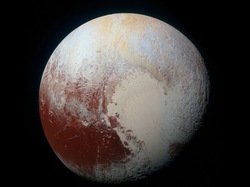
So, my understanding is that the Simp is all alone?
Just like me fr
If you are being serious, please find some local in person hobby groups that interest you and join them. It’s absolutely worth it.
I think it was a joke.
Pretty normal for simps. Sorry.
Being that size can be really fucking intimidating to others.
SIMP? More like PGTOW (Planets Going Their Own Way)
This planet is no orbiter.
I hate that I laughed at that
Planets Gone Wild
Orbs Gone Wild.
So, my understanding of auroras is, the planet’s magnetic field draws particles emitted by the sun toward the poles, and as those particles interact with the atmosphere they glow. So without a star and thus without solar wind, where do the aurora come from?
I mean, it has a magnetic field 6 or 7 orders of magnitude higher than ours. Id guess that extra strength allows it to pull particles from much further away and possibly from sources much more reticent to give up their particles than solar wind
Both the magnetic field strength and charged particle flux fall off proportional to the square of the distance from the planet / star respectively, so I doubt it gets much of anything even with a strong magnetic field unless it’s also near a star.
I’d also point out that the particles aren’t really attracted by the earths magnetic field, we’re just in the pathway, and the magnetic field funnels them to the poles. It’s more guidance than attraction.
If the rogue planet is truly all alone in space, you’re definitely right. 4 million times is a lot, but space is really, really big, and solar radiation falls off with 1/r^2.
Let’s assume the auroras are proportional to the size of the magnetic field. That’s probably not true, it’s probably actually proportional to the square root of the magnetic field because field strengths fall off with 1/r^2, but let’s give it the best possible chance of having huge auroras. That would mean that a planet with 4x the magnetic field of Earth would have the same Aurora brightness at 2x the distance. So, something with 4 million times the magnetic field would have the same brightness at sqrt(4,000,000) the earth-to-sun distance, or 2000x the distance. If it were in our solar system, or even just near our solar system, it would be bright. But, space is big.
Since the earth is about 500 light-seconds from the sun, 2000 earth-distances is about 1 million light seconds, or about 11.5 days. By comparison, the closest star to Sol is Proxima Centauri at 4 light years. So, these Auroras would only be earth-like if the rogue planet were very close to some star. It wouldn’t have to necessarily be in orbit of that star, but it would have to be pretty close. If it were out in the space between the stars, there’s just nothing there for the magnetic field to interact with.
But there are an estimated 100-400 billion stars in the Milky Way, some of which are hundreds of solar masses, not to mention the Accretion disks of black holes all kicking out radiation. That’s gotta add up to something, even with the inverse-square law fall off. The galactic core has unfathomable levels of radiation and puts out its own galactic wind, and some stars have observable bow shocks with it.
That’s gotta add up to something, even with the inverse-square law fall off
No, it doesn’t, precisely because of the inverse square law.
I dont think you’re quite understanding how big 6 orders of magnitude is. 4000000/r2 still falls off way slower than 1/r2.
Also the funnel diagram of the earth’s magnetic field you’re referring to is a near field effect. In the far field regime the only field components that stay strong enough to be relevant are those parallel to the axis of the dipole; a dipole is functionally identical to a bar magnet if you’re measuring it from far enough away. If my understanding of solar wind is correct and the aurora refers to an interaction that occurs between the earth’s magnetic field and particles near the sun, we’re definitely in the far field regime
I don’t think you’re quite understanding the distances involved in what I’m getting at. The particle flux is minuscule, and it’s not the magnetic field that’s attracting particles. It’s only guiding the particles that were already headed towards the planet.
This planet would have great aurorae if it were near a star, but it’s not, so the magnetic field strength is kind of a moot point.
From how far could the planet guide particles into its aurora?
The absolute distance is strictly irrelevant given this is a relative comparison between two magnetic fields. The one that is 6 orders of magnitude higher will maintain that 6 orders of magnitude difference exactly the same at a distance of 100m as it will at a distance of 100au. That means that the stronger field will maintain the minimum strength required to “guide” particles towards the dipole at a greater distance than the weaker magnetic field would. I feel you if you’re only trying to argue that it would still need to be within some neighborhood of some star to produce an aurora, but your posts read like you’re claiming 6 orders of magnitude on the magnetic field makes no difference on how close that object would need to be to produce an aurora, which is flatly incorrect.
No star = no charged particles = no lights. Doesn’t matter how big the magnetic field is.
That’s all he’s saying.
The absolute distance is extremely relevant to how many particles reach the planet, which in turn is extremely relevant to how bright the aurora is.
That is correct. It also has nothing to do with the original claim I made and you disagreed with, which is that the object with the greater magnetic field would be able to attract particles from farther away.
I see cheap MRIs
Im guessing it only occurs when it is in a cloud or trail of charged particles. or perhaps there is a local (climatic?) cycle that sends charged particles to the poles.
The Wikipedia linked in these comments says it is likely from electron precipitation. Basically the magnetic field traps free elections and thus “wiggles” as they interact with the field. This can make a (pulsed) radio jet shooting from the pole, which is how this planet was observed. These electrons can fine from atmospheric phenomena such as lightning or large storms.
Earth has the same but much weaker phenomenon, the Van Allen belt, which was a difficult challenge to handle in the early days of space exploration.
Kind of, but not really.
Auroras dont necessarily need a stars radiation. Any old radiation will do, so long as there are charged particles floating around. Jupiter, for example, has gigantic continuous aurora around the magnetic poles. If auroras only came from the sun, and the earth is much closer to the sun than Jupiter, wouldn’t earth have a bigger aurora than Jupiter?
No, obviously. The size of the aurora depends on the size of the magnetic field interacting with charged particles and the number of those charged particles.
In the case of supermassive planets like Jupiter and this rogue planet, they produce way more of their own radiation than they recieve from the sun or space. This rogue “planet” in particular is so massive that it could actually fuse deuterium down in the core just with the pressures and temperatures of gravity crushing all that matter down. If you pumped enough hydrogen in there to quadruple the mass, it would probably ignite into a star quite comparable to our sun.
For that reason, it’s better to think of this as more of a baby star that didn’t quite eat enough wheaties than a planet in the traditional sense we think of here in our solar system.
With the crazy physics that come with suns and near dwarfs with similar mass, it’s no surprise that it generates a titanic magnetic field, and as a bonus, it produces its own radiation. It creates all the necessary ingredients it needs to make it’s own spectacular auroras with no actual outside interaction.
Tl;dr it makes it’s own aurora
The theory seems to be captured radiation (electron) fields. Earth even has one. A stray planet and its halo of interstellar objects might have a very large and complex radiation belt system.
Just what I was wondering.
wtf,they have several classifications.
- free-floating planetary-mass object
- exoplanet
- rogue planet
- brown dwarf
welcome to science where theres names, AND acknowledgement that things change with new data
Detecting SIMP J01365663+0933473 with the VLA through its auroral radio emission,
Strangely attracted to distant stars yet unable to establish a stable orbit, Simp 0136 is condemned to a lonely existence.
Whoa, that’s deeper than deep space, bro. *exhales*
Strangely Independent Massive Planet - Simp
wait is this real or a joke? do we have a new planet that I’ve never heard of??
This planet isn’t in our solar system. We’ve found 6,053 exoplanets already, so it’s a safe bet that there’s lots more of them than you’re aware of
We have discovered over 6000 exoplanets in total, and over 100 in this year. I’d be surprised if you knew of all of them
deleted by creator
I mean… it’s definitely possible, I have seen a person naming every subdivision of the world, which is a bit less than the amount of exoplanets we know (~4000 vs. >6000), but only by 2000, so eventually some person will just do that.
Galaxy, not Solar System. There are a lot of planets in our galaxy that you’ve probably never heard of
Yep
Interesting, I just finished reading Rendezvous With Rama.
If a massive object like that was to pass through our neighbourhood I think it could fling planets out of the solar system.
Even with this mass this planet would have to pass one of the outer planets extremely close and quite slowly to have a chance of dragging a planet out of the solar system.
This is the same sort of idea as when galaxies merge. There is little chance of our solar system being effected in that scenario. There is just too much space to space.
Aren’t we currently galaxy merging?
2-5bn years with andromeda, not even close.
Thank you but I didn’t mean andromeda. I think heard something about merging with a dwarf galaxy or something
You are correct! Here’s a really good video on the topic.
You’d think we would be able to see a dwarf galaxy approaching close to our galaxy at night? Or how dwarfey are we talking?
I don’t know why you bring up being able to see the dwarf galaxy at night as a qualifier. The dwarf galaxy I’m talking about seems to be Sagittarius Dwarf Spheroidal Galaxy
I don’t know why you bring up being able to see the dwarf galaxy at night as a qualifier.
Because a whole ass galaxy should be visible, I would think, but I also asked how small we’re talking — maybe it wouldn’t be visible. You know?
Anyway,
The Sagittarius dwarf galaxy, a small satellite of the Milky Way that is leaving a stream of stars behind as an effect of our Galaxy’s gravitational tug, is visible as an elongated feature below the Galactic centre and pointing in the downwards direction in the all-sky map of the density of stars observed by ESA’s Gaia mission between July 2014 to May 2016.
Scientists analysing data from Gaia’s second release have shown our Milky Way galaxy is still enduring the effects of a near collision that set millions of stars moving like ripples on a pond. The close encounter likely took place sometime in the past 300–900 million years, and the culprit could be the Sagittarius dwarf galaxy.
Seems like it was only a near collision eons ago, but maybe it’s still on a an absorption path to be consumed by The Milky Way in the future. Cool, didn’t know about that.
Our galaxy is capturing smaller galaxies but there won’t be a merge of equal sizes for a couple billion years with andromeda.
With Andromeda, yes
Haven’t even begun colliding though. We can still see it way in the distance. It’s millions/billions of years away until colliding.
Imagine the night sky far in galactic future when Andromeda is like directly overhead at night. What an amazing view. Shame earth wouldn’t be around to see it.
Only a few short galactic years off!
Oh god. Thanks for that midlife crisis!
Yes we are in middle of a multi million year process of merging of the bigger Andromeda galaxy and our Milky Way galaxy.
That’s one of my very favorite books. It’s fantastic at setting the mood. The further books are ok but not as much to my taste.
I still need to read the book! My main familiarity with RAMA is the 199(5?) PC game that was mind bogglingly obtuse with math puzzles but the world was SO fascinating! I need to figure out how to play it again with my grown up brain…
The soundtrack was INCREDIBLE…
Apparently ScummVM supports the game, though idk what’s with the size of this particular upload.
That’s awesome! Thanks SO much for pointing me to that! I too wonder what the 2GB size is. It looks like they have two different sets of packages, one being a “source archive” that’s just a raw CD dump.
I can see it, since the game was on like, 4 or 5 CDs back then, and involved a lot of heavily compressed video!
I have a fun feeling that maybe I can run this really well in Bottles, it ScummVM alone doesn’t do the trick. :D
Here’s a link I found to the soundtrack in “CD Quality”, with a download link, if you’re interested.
https://youtube.com/playlist?list=PLbSFnTrLHtkp8Yj7bSdaN_jQUy7iOXscq
That 90’s crystal-synth is the most gorgeous thing…it reminded me very much of the soundtrack to Journeyman Project 2: Buried in Time. :D
ScummVM should work swimmingly and better than Wine. I used it on an Android tablet — though one game crashed at a particular point, thankfully not far into it.
There’s also an audio play which was neat.
Oh that’s really cool! I’m gonna search for that! Maybe my library has it, or I can bug them to get it. :)
EDIT: Is it the BBC one you’re talking about?
It is. I found it interesting!
Oh, I absolutely loved all of them, but it’s def a different kind of sci-fi (less human-techy) compared to the first book.
I love that whole series, amazing books!!
But yes, this simp is basically a failed star that was prob flung out of some nursery.
You may enjoy Fritz Leiber’s short story, “A Pail of Air”, which involves the Earth being ejected.
Maybe we could attract it with an OnlyFans subscription.
You mean OnlyPlanets
Young, dumb, and not-orbiting a sun… ;)
Let’s not. I like the solar systems orbits exactly as they are
Well, there’s a stronger case being made every day for flinging ourselves into the sun.
Ofc the simp is cucked in the corner not allowed to join the orgy of planets.
Doh!
Borg Sphere Model 2025
So how come there’s an aurora when there’s no star to spray it with electromagnetic radiation?
Because the planet produces its own radiation. That much mass means this is less a “planet” and more of a proto star. It’s actually large enough to fuse deuterium if the right conditions arise. Pour enough hydrogen in there to raise the mass three of four times what it has now and it’d be comparable to our sun.
So it’s like smoke or burning embers before a flame ignites?
Would this be a star which wasn’t big enough and fizzled out into a big planet?
Every planet is a star which wasn’t big enough. Some are just more challenged than others.
Cool, thanks for that!
better question, is a star required for EMR?
Nah, that’s a yes or no question, that’s a worse question. I want to know what’s causing the aurora, if not a star.
Name seems wrong but you do you, SIMP 0136
He’s just jealous 'cause the dorks on Earth called him a failed star.