

1·
4 days agoTo be weighed against the profits from having all that new data on user identities.
To be weighed against the profits from having all that new data on user identities.

Yes, but they’ll rule that using free open-source software is terrorism.

So are half of his children.
I’ll raise my glass of delicious, cool Coca Cola to that!

Yes, stopping gun crime is how they sell it; protecting corporate profits by preventing home-made repairs and prototyping is how they will use it.
It won’t just affect Californians. Printer manufacturers will make one model for everyone, and it will comply with this law.

Tucker Carlson says a lot of things. He’s no ally.
I think it’s a fascist eugenics program. They think they are the strong ones and everyone else is weak, and the weak should die off so people like Elon Musk can repopulate the country with their superior genes.
As I understand it, you’re right that you need a good length of output to be able to detect the watermark, because only then can you see the statistical effect with confidence. And in code there are usually various options for how you get something done, and they could watermark generated code by adding a distinctive pattern to its preferences for certain constructs over others. But again, it would have to be subtle, so you’d need a large enough sample of its output before you could see the effect.
You can’t enforce that with text though, because people will just delete the words. They use a subtle statistical signal because people can’t just spot it and delete it. Unfortunately it raises a problem: either they have to make the signal a secret, in which case only Anthropic and those contracted to keep the secret could detect it, or it’s not, in which case people can use a detector and some other AI to discover how to eliminate the signal. I expect Anthropic would try to keep control over the detection secrets and provide a detection API for third-party software to use.
And by that they mean the power to hunt down brown people in shops.
I was apprehensive about buying a used Pixel to install GrapheneOS on, so I put it off for a year or two. When I finally did it, it was so easy I wished I had done it sooner. It’s a great OS and you’ll probably be surprised how easy it is to set up. Things have really changed since the old days of finding half-baked custom Android images on dodgy file shares through forum sites.
This is the study done in 2014, not a new one. Things are worse now.

What a coincidence that it was the guy protesting the police who was also suspected of possessing such materials. If it turns out they had real independent grounds to suspect he had such images, I’ll change this view, but for now I assume that’s the cops’ standard line to shut down people’s questions. Just say they thought the political target had CSAM, and immediately people see him differently, plus the police can accuse anyone who challenges their actions of supporting pedophiles.

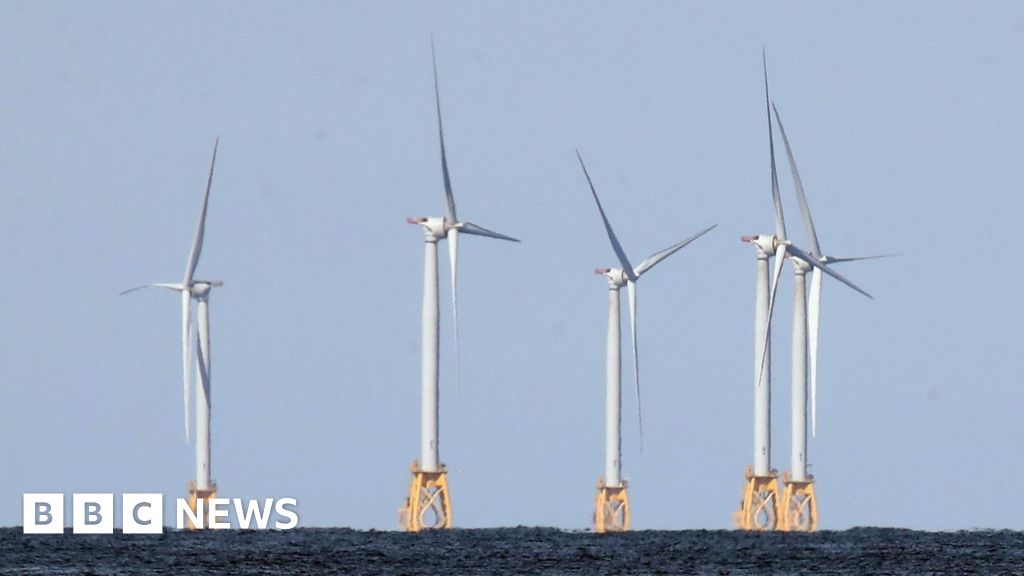
President Donald Trump’s former international energy adviser has a new, counterintuitive pitch to sell Republicans on one set of technologies to reduce global warming: They could help keep the world hooked on oil, gas and coal, at least for a while.
“If I were in this current White House, I’d say, ‘Well, we should support SRM because it’s a good insurance policy for continued fossil fuel use,'” said George David Banks, referring to solar radiation management, a largely theoretical response to global warming that involves spraying reflective particles into the stratosphere.
That’s the very concern that puts responsible people off this type of geoengineering: it will enable us to continue damaging the planet without seeing the full consequences, until our children and grandchildren find themselves in an even worse uninhabitable mess than we’re currently heading for. The fact that this downside is a selling point to Republicans suggests that they are sociopaths, and/or deluded rich people who think money and bunkers will protect them from the collapse of civilization.
Maybe he was born in 1969 and started coding at 6 months old.
I don’t know much about these things, but if Proton uses standard protocols it ought to be possible to connect without using their own client.

It’s the American way.

In which ways did you find Nord worse? I found Nord faster than Mullvad and better at spoofing my location in different countries for streaming services.
Proton VPN is probably the first other one that springs to mind as offering privacy comparable to Mullvad. Its CEO was criticized last year for making approving comments about some things Trump was doing in the USA, but it was mostly about opportunities to challenge big tech companies, and he claimed not to be a MAGA supporter in general. There was no evidence, as far as I know, of him donating to right-wing organizations.








Not exactly courageous leadership.