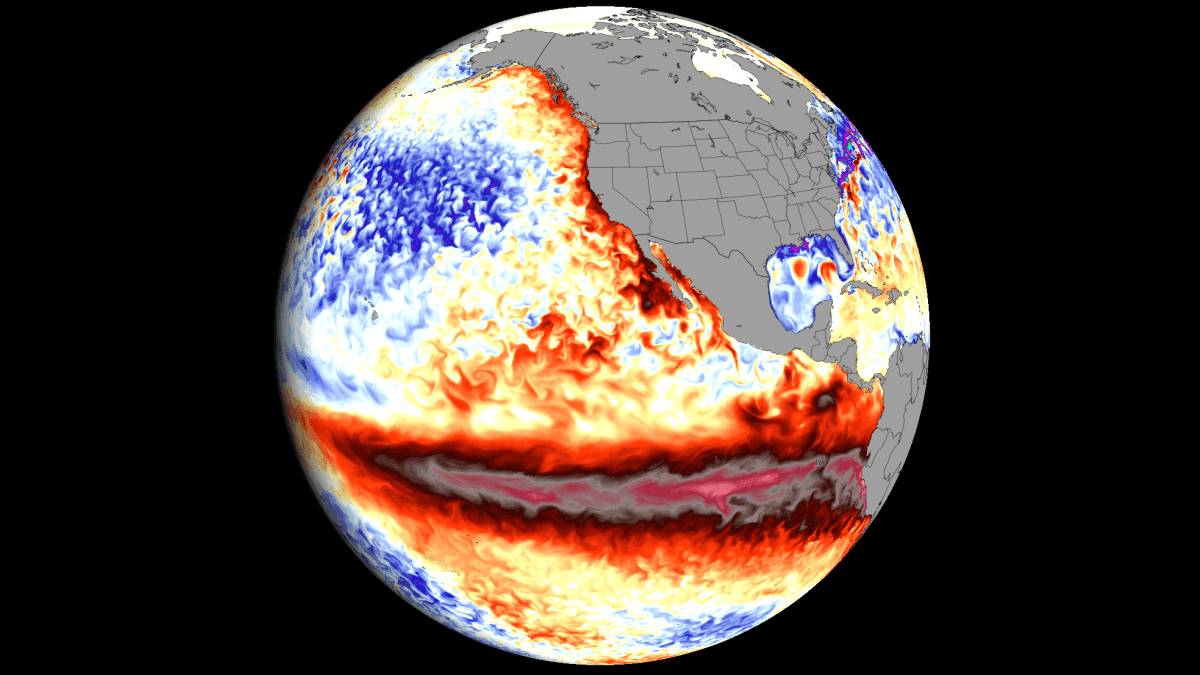
Super El Niño continues to strengthen as new forecasts push toward record levels, with Fall and Winter 2026/2027 impacts emerging across the United States, Canada, and Europe
A significant amount of global food supply comes from Brazil (certain grains, especially coffee and soy). When it’s winter across the Northern hemisphere, it’s summer here in the Southern hemisphere. And that’s the thing: we (Brazil) are already facing the effects of this super El Niño, including but not limited to, cyclones. The Brazilian Southern (inc. Rio Grande do Sul), a region mostly responsible for rice production, is a region where floods have became ubiquitous in the latest years. Even though I’m a Brazilian, I don’t quite remember all the observable consequences of climate change and/or El Niño across the Brazilian territory as I’m writing this reply. All I remember for sure is that we’ve been facing climate catastrophes way before this Super El Niño appeared, and now it’s poised to be worse. Where I live, the southeast Brazil, I’ve been noticing more and more unstable climate, sudden and quite dangerous “ciclones bomba” (“bomb cyclones”, or explosive cyclogenesis), strong winds out of nowhere, among other phenomena.
One of the major mistakes that we humans keep commiting is this kind of thinking: “how it will affect my region”, as if the planet Earth wasn’t this interconnected, interdependent ecosystem. There’s this thing, “butterfly effect”, in which “a flap of a butterfly wing in Brazil can set off a tornado in Texas”; although the phrase per se is obviously hyperbolic, we do observe when disturbances (from ecological, as in fauna and flora, to economical, as in fewer yield from agricultural activities) on a region inevitably leads to consequences for other regions, no matter the apparent geographic distance, no matter the borders. In fact, Mother Nature does not care about our social construct “borders/frontiers”, and the El Niño, supercharged by the anthropogenic climate change, is a chilling demonstration of this.
This article doesn’t discuss that, however, it does mention that the global effects of the Super El Niño (SEN) are already being felt.
According to the models in the article, European winter temperatures will be somewhat higher (1 to 2C) than usual. Snowfall in general will be lower, though higher in the Alps. That could support the idea that, like in 2026, early meltwater will fill the Alpine rivers (Rhine, Rhône, Donau) but be depleted relatively early come summer. However, there is no summer forecast yet.
The higher temperatures forecast are just 1 to 2C. That’s warmer but not a lot. Results will be less ice and snow so more runoff rainwater, possibly contributing to a dryer summer. Warmer temperatures are also not great for flora and fauna that depend on winters being cold.
This article doesn’t go into that, but given the SEN it wouldn’t be strange to think that 2027 will be a very hot year. This is also predicted by James Hansen, though he thinks high temperatures are not only a result of the SEN, but of climate change having gone into overdrive because climate sensitivity is much higher than the IPCC seems to think. See also here.


Can somebody give a practical understanding what this means and has meant more Europe?
A significant amount of global food supply comes from Brazil (certain grains, especially coffee and soy). When it’s winter across the Northern hemisphere, it’s summer here in the Southern hemisphere. And that’s the thing: we (Brazil) are already facing the effects of this super El Niño, including but not limited to, cyclones. The Brazilian Southern (inc. Rio Grande do Sul), a region mostly responsible for rice production, is a region where floods have became ubiquitous in the latest years. Even though I’m a Brazilian, I don’t quite remember all the observable consequences of climate change and/or El Niño across the Brazilian territory as I’m writing this reply. All I remember for sure is that we’ve been facing climate catastrophes way before this Super El Niño appeared, and now it’s poised to be worse. Where I live, the southeast Brazil, I’ve been noticing more and more unstable climate, sudden and quite dangerous “ciclones bomba” (“bomb cyclones”, or explosive cyclogenesis), strong winds out of nowhere, among other phenomena.
One of the major mistakes that we humans keep commiting is this kind of thinking: “how it will affect my region”, as if the planet Earth wasn’t this interconnected, interdependent ecosystem. There’s this thing, “butterfly effect”, in which “a flap of a butterfly wing in Brazil can set off a tornado in Texas”; although the phrase per se is obviously hyperbolic, we do observe when disturbances (from ecological, as in fauna and flora, to economical, as in fewer yield from agricultural activities) on a region inevitably leads to consequences for other regions, no matter the apparent geographic distance, no matter the borders. In fact, Mother Nature does not care about our social construct “borders/frontiers”, and the El Niño, supercharged by the anthropogenic climate change, is a chilling demonstration of this.
!worldnews@lemmy.ml
Actually, it’s very valid and certainly not a mistake to ask questions. Especially not about events of global significance.
In answer to your questions:
It means total societal collapse by 2050 due to parts of the planet becoming unsurvivable and global crop failures.
No, that’s climate change.
True.
From what I’ve heard it’s not really important