

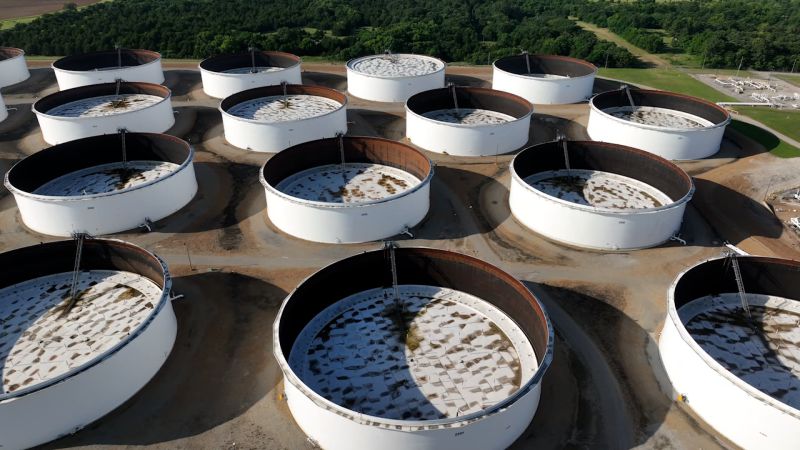
First it says
In normal times, Cushing stores around 40 million barrels of oil with capacity of up to 75 million.
But then…
When Cushing’s reserves get below 20 million, they effectively hit empty, scraping the bottom of the barrel of what is largely unusable sludge.
From what I find, there is a way to reprocess the sludge, such as distillation and pyrolysis.
https://www.doinggroup.com/index.php?u=show-2174.html
Floytweg claims it can recover up to 90%
The Flottweg Tricanter® system offers a comprehensive solution for oil sludge treatment, recovering approximately 90% of the oil from sludge in ponds, lagoons, or from crude oil tank cleaning. This not only recycles the oil as a valuable product but also significantly reduces the volume of solids to be disposed of, cutting down on transport, landfill, and incineration costs.
https://www.flottweg.com/applications/industrial-waste-mineral-oils/oil-sludge/
While I acknowledge there is a cost, the tanks could be cleaned and most of the oil recovered.
The bigger picture is that the oil is depleting at an alarming rate though. Like sure, they can recover what’s left, but once that’s gone in a month or so then what?
I’d also suggest that rate of production is a serious element. How fast and at what volume are they able to process the sludge back into a usable state? On the above linked website, their faq identifies at least three different processes and handling methods determined by the state of the sludge. So this isn’t a simple or even expedient process and will be limited by the specific technical and infrastructure demands of the method. If they can start producing a hundred thousand barrels a day from sludge, there remains a significant shortfall to in the refining supply chain which can’t operate efficiently or even at all at reduced thresholds.
Yeah, it’s something that could be done to recover oil in the long term, but doesn’t really help with the immediate problem in any way.
That’s a fair assessment. I don’t argue that we need more oil. It just seems like a waste for them to be containing so much unusable product.
oh for sure
While it can be cleaned up, the time is another big problem with it. It’s like a bakery having only 3 loaves of bread left, but another 500 pounds of flour in the back.
Yes it will take time. But using your analogy, it’s like a bakery that can shelve 200 loaves of bread with 3 good loaves remaining, and 50 moldy loaves of bread still on the shelf.
But in this case, if we don’t just leave the loaves on the shelf, there’s a process to recover 45 of those moldy loaves as good usable loaves.
Or we could just leave the moldy ones alone, because cleanup takes time and money. But we lose shelf space for good loaves and who knows what the the health risk is to the workers.
The sludge can eat away at the container, exposing the environment to toxins. It’s also using a good deal of their storage. Their maximum is 75 million barrels, with 20 million barrels worth of sludge. That’s product that can’t be sold as is and is simply being stored.
It’s probably a good idea to do some maintenance to clean out sludge, but the time to do that isn’t when there’s nothing left to send down the pipes.

