Cushing, Oklahoma, dubs itself the pipeline crossroads of the world. The tagline is emblazoned on a giant roadside sign fashioned out of pipes on the corner of Main Street and South Stiles Road. It has a valve and everything.
While it can be cleaned up, the time is another big problem with it. It’s like a bakery having only 3 loaves of bread left, but another 500 pounds of flour in the back.
Yes it will take time. But using your analogy, it’s like a bakery that can shelve 200 loaves of bread with 3 good loaves remaining, and 50 moldy loaves of bread still on the shelf.
But in this case, if we don’t just leave the loaves on the shelf, there’s a process to recover 45 of those moldy loaves as good usable loaves.
Or we could just leave the moldy ones alone, because cleanup takes time and money. But we lose shelf space for good loaves and who knows what the the health risk is to the workers.
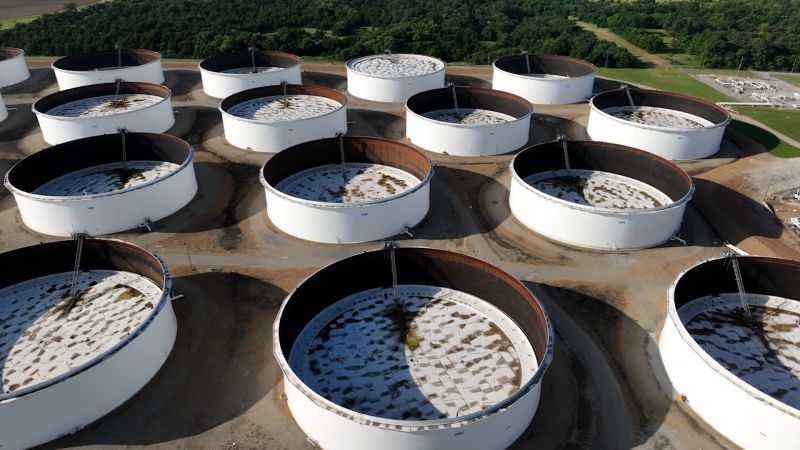
The sludge can eat away at the container, exposing the environment to toxins. It’s also using a good deal of their storage. Their maximum is 75 million barrels, with 20 million barrels worth of sludge. That’s product that can’t be sold as is and is simply being stored.


While it can be cleaned up, the time is another big problem with it. It’s like a bakery having only 3 loaves of bread left, but another 500 pounds of flour in the back.
Yes it will take time. But using your analogy, it’s like a bakery that can shelve 200 loaves of bread with 3 good loaves remaining, and 50 moldy loaves of bread still on the shelf.
But in this case, if we don’t just leave the loaves on the shelf, there’s a process to recover 45 of those moldy loaves as good usable loaves.
Or we could just leave the moldy ones alone, because cleanup takes time and money. But we lose shelf space for good loaves and who knows what the the health risk is to the workers.
The sludge can eat away at the container, exposing the environment to toxins. It’s also using a good deal of their storage. Their maximum is 75 million barrels, with 20 million barrels worth of sludge. That’s product that can’t be sold as is and is simply being stored.
It’s probably a good idea to do some maintenance to clean out sludge, but the time to do that isn’t when there’s nothing left to send down the pipes.