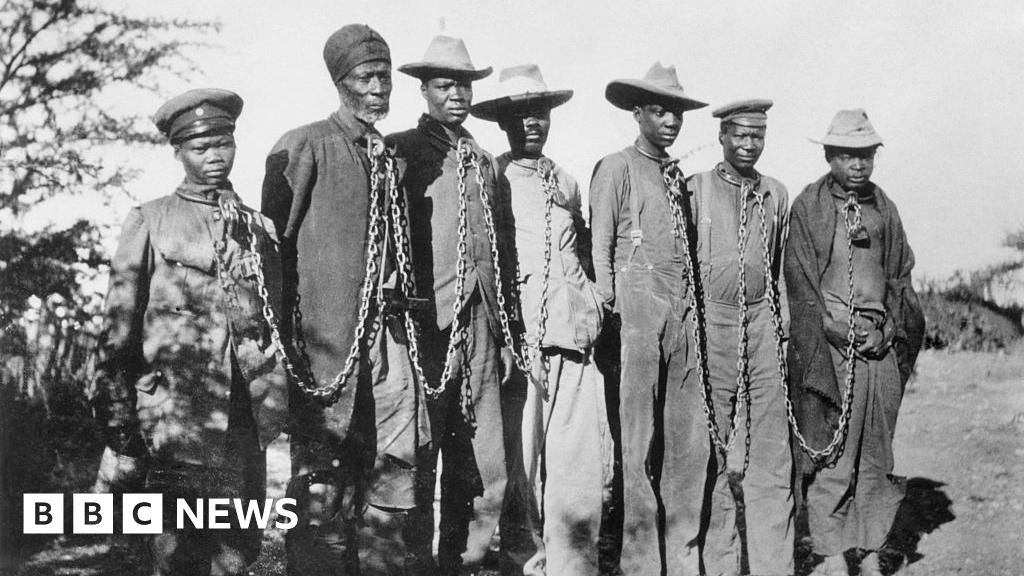
For many years Germany did not publicly acknowledge the mass slaughter that took place between 1904 and 1908.
But four years ago it formally recognised that German colonisers had committed the genocide, and offered €1.1bn (£940m; $1.34bn) in development aid to be paid out over 30 years - with no mention of “reparations” or “compensation” in the legal wording.
Namibia declined that offer, calling it “a first step in the right direction” that nonetheless had failed to include the formal apology and “reparations” it was seeking.
Many Namibians were not impressed by what they saw.
“That was the joke of the century,” Uahimisa Kaapehi told the BBC at the time. “We want our land. Money is nothing.”
He is an ethnic Ovaherero descendent and town councillor in Swakopmund, where many of the atrocities took place, and said “our wealth was taken, the farms, the cattle”.
A group representing genocide victims’ families was also scathing about the deal offered in 2021, calling it evidence of a “racist mindset on the part of Germany and neo-colonial subservience on the part of Namibia” in a joint statement.
Since then a draft deal has been reached between the two nations that would include a formal apology given by Germany, and which would reportedly increase the overall sum by an extra €50m.
But many Ovaherero and Nama campaigners say the deal is an insult to their ancestors’ memory and that they were unfairly excluded from the negotiating table. News of a national day of remembrance has been met with cynicism from some, with community activists saying restorative justice is still a long way off.
Read on, if you can stomach it. It’s extremely infuriating and depressing, at once.


Read on, if you can stomach it. It’s extremely infuriating and depressing, at once.