Can’t we identify the genes responsible for their stomach formation
Absolutely.
and CRISPR them unto humans, theoretically giving them the same abilities?
Absolutely not.
CRISPR and related techniques are not magic. The interplay between gene presence and trait expression is absurdly more complicated than that. You cannot simply “edit in” entire biological adaptations, that’s not how it works.
The most likely scenario in such an attempt would simply be nothing. Other possibilities include: Autoimmune lifelong digestive system issues, and death, amongst many others.
To add on to this, vultures stomach acid pH ranges between 0 and 1.
So unless you’re also modifying the stomach and gut tissue to be able to withstand hydrochloric acid I’m pretty sure that (if successful, which is a big if) that person just dies.
And that “somewhere” is optogenetics mice, bacteria that produce egg whites, and glowing fish. Not a complete rewrite of the entire human digestive, immune and microbiotic systems!
Also rabies immunity is because they’re birds not mammals, if you want that; add nervous system and metabolic overhauls as well.
Biggest hurdle to just experiment by randomly crispr-editing in humans are ethical, as a society the majority does not want a repeat of experiments similar to Mengeles twins.
Even though I would love to edit myself to be able to digest lignin and cellulose
Ethics are a big hurdle, but I wouldn’t call it the biggest. Mengele was a conscienceless monster who played at pseudo science.
The biggest hurdle to gene editing is that it’s fucking hard. Even Mengele V2.0 with no morals and a stable of daily test subjects wouldn’t lead to a ‘mastery’ that lets you merely select for your changes to only include digesting lignin and cellulose.
Seriously. It’s really hard to even model within acceptable error margins, what the results of gene therapy will be. The potential for disastrous results also only goes up the more complex the interactions you’re trying to affect.
The boy, first treated in February at just 7 months old, still needs a special diet and medication; the experimental therapy alone isn’t enough to prevent a dangerous buildup of ammonia in his blood caused by a faulty gene for a key liver enzyme. Still, the swift development of a gene editor that appears to have repaired the defect in some of his liver cells is a landmark demonstration of a personalized approach that has tantalized rare disease researchers.
That vague language glossed over tragedy: Seven days after the girl’s medical team infused trillions of viruses carrying the recipe for the base editor into her spinal fluid, she died of a severe immune reaction linked to the therapy, Science and Retraction Watch can now reveal.
In a possible future, itself perhaps locked in to some other timeline, your dreams may be possible for your grandchildren and great-grandchildren. But today, they’re just as likely to get you dead.
If Im honest I just wish for humanity to be able to treat chromosome issues and lethal fetal issues.
Let trendy transhumanism and cellulose digestion stay on the pages of fiction. I used Mengele as the worst breaker of ethics and horrible practises I could think of
Progress is trying to march in that direction. It’s just subtly (I.e, not something PopSci usually covers) one of the hardest scientific undertakings of our time.
I also don’t feel as though neither enough attention nor funding is being directed that way currently.
Still sounds like a better and more likely survivable outcome than elon musk’s chances of having a positive and interesting interaction with a woman (from the woman’s perspective of course). If that occurs it may create a blackhole.


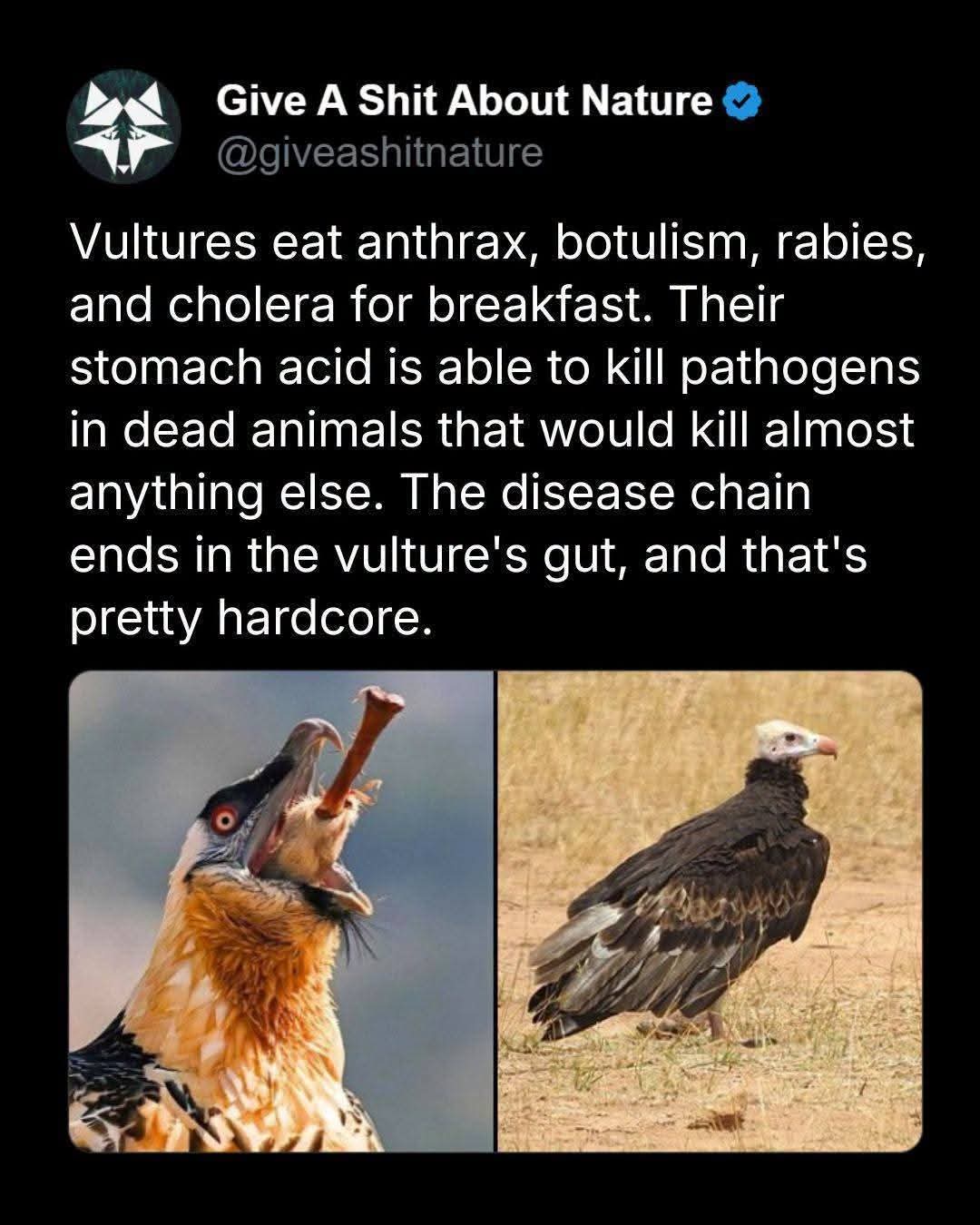
Absolutely.
Absolutely not.
CRISPR and related techniques are not magic. The interplay between gene presence and trait expression is absurdly more complicated than that. You cannot simply “edit in” entire biological adaptations, that’s not how it works.
The most likely scenario in such an attempt would simply be nothing. Other possibilities include: Autoimmune lifelong digestive system issues, and death, amongst many others.
To add on to this, vultures stomach acid pH ranges between 0 and 1.
So unless you’re also modifying the stomach and gut tissue to be able to withstand hydrochloric acid I’m pretty sure that (if successful, which is a big if) that person just dies.
Vulture pH is closer to 0.2, ours is closer to 2.
it’s 10x more acidic than ours, so yeah, we would need to probably refine the entire digestive system
~100x it’s a logarithmic scale
I mean, our stomach acid is hydrocloric acid. Just ours isn’t nearly as concentrated.
Considerably less so, but yes I should have specified the concentration
Any sufficiently advanced technology is indistinguishable from magic
Yes. after it reaches a certain point of maturity. Gene editing hasn’t.
We have to start somewhere
And that “somewhere” is optogenetics mice, bacteria that produce egg whites, and glowing fish. Not a complete rewrite of the entire human digestive, immune and microbiotic systems!
Also rabies immunity is because they’re birds not mammals, if you want that; add nervous system and metabolic overhauls as well.
Biggest hurdle to just experiment by randomly crispr-editing in humans are ethical, as a society the majority does not want a repeat of experiments similar to Mengeles twins.
Even though I would love to edit myself to be able to digest lignin and cellulose
Ethics are a big hurdle, but I wouldn’t call it the biggest. Mengele was a conscienceless monster who played at pseudo science.
The biggest hurdle to gene editing is that it’s fucking hard. Even Mengele V2.0 with no morals and a stable of daily test subjects wouldn’t lead to a ‘mastery’ that lets you merely select for your changes to only include digesting lignin and cellulose.
Seriously. It’s really hard to even model within acceptable error margins, what the results of gene therapy will be. The potential for disastrous results also only goes up the more complex the interactions you’re trying to affect.
At current time, even some of the best recorded attempts which are decidedly positively quality of life altering (e.g. [emphasis mine] https://www.science.org/content/article/gene-editing-therapy-made-just-6-months-helps-baby-life-threatening-disease) still come with great caveats:
Meanwhile, even renowned institutions starting from best intentions, get it horribly wrong, because the interactions are just that hard to model (e.g. [emphasis mine] https://www.science.org/content/article/exclusive-death-girl-chinese-gene-editing-trial-was-never-made-public):
In a possible future, itself perhaps locked in to some other timeline, your dreams may be possible for your grandchildren and great-grandchildren. But today, they’re just as likely to get you dead.
If Im honest I just wish for humanity to be able to treat chromosome issues and lethal fetal issues.
Let trendy transhumanism and cellulose digestion stay on the pages of fiction. I used Mengele as the worst breaker of ethics and horrible practises I could think of
That’s the goal.
Progress is trying to march in that direction. It’s just subtly (I.e, not something PopSci usually covers) one of the hardest scientific undertakings of our time.
I also don’t feel as though neither enough attention nor funding is being directed that way currently.
when you can digest cellulose but you lose 90% of your daily fiber and get colon cancer
Still sounds like a better and more likely survivable outcome than elon musk’s chances of having a positive and interesting interaction with a woman (from the woman’s perspective of course). If that occurs it may create a blackhole.