Check out ChatLLM from Abacus.AI: https://chatllm.abacus.ai/altTimestamps:00:00 - Chinese EUV Efforts09:00 - How It Works11:34 - Last Missing Piece15:30 - Ou...
it’s really says something about the deep knowledge that the chinese must have considering that they chose to solve a brick from the red brick wall that asml decided to work around and it’s also surprising that they would chose something that has a heavy duty dependency on a resource that their political rivals control.
i fear that; by the time they do get this working at scale; the west will have recreated the industries that were crushed by china’s rare earth mineral control and will have all the leverage because of helium.
if that happens, china’s microelectronic industry is going to so the same way that the soviet’s went – nothing more than an historical footnote with interesting findings.
There is no way around needing helium, but China will boost their own production in time and they have access to helium from Russia as well. Meanwhile, the reason they can move so fast is due to having a centrally planned system the west rejects. It’s the same reason Russia is now outproducing all of NATO in terms of weapons and ammunition.
The west is in no position to recreate the necessary supply chains. Rare earths alone is a perfect example. I wrote about the problem in detail here if you’re interested. Even under the most aggressive diversification scenarios, China is expected to retain 80% of global refining capacity by 2040. And that’s just one example. The west has very little leverage at this point.
Also, as she correctly points out, China doesn’t need to get to ASML levels to make these fabs useful. As long as they’re better than the current ones, that already means China will be producing better domestic chips. And they’re also innovating with architecture as well such as Huawei’s tau law design which folds the chip and dramatically improves performance. All these things work together.
Finally, China is aggressively pursuing alternative computing substrates and some are already starting to come online. This is a recent example. These kinds of things have the potential to leapfrog silicon chips entirely. There’s nothing comparable happening in the west because you can’t do these kinds of projects without massive amount of state funding and direction to sustain them until they become profitable on their own.


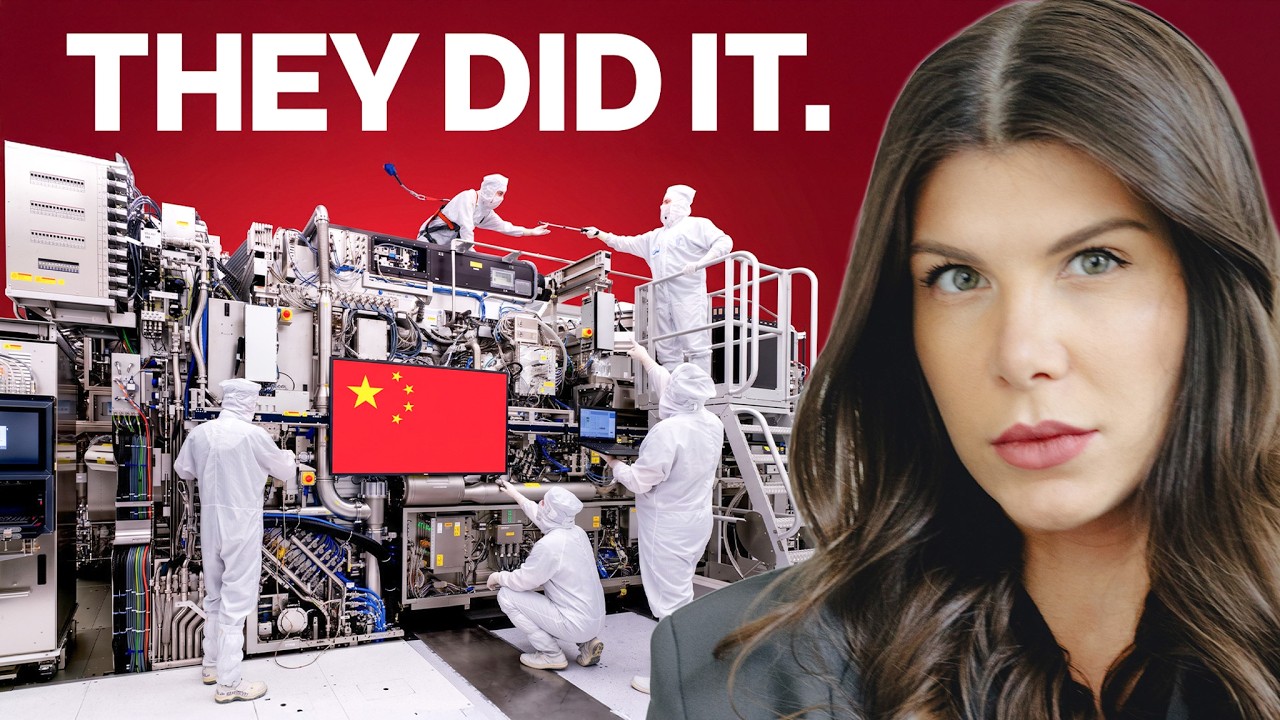
Clickbait titles???
I just kept the original title, she does explain how EUV works well, as well as the difference between Chinese approach and what ASML did.
it’s really says something about the deep knowledge that the chinese must have considering that they chose to solve a brick from the red brick wall that asml decided to work around and it’s also surprising that they would chose something that has a heavy duty dependency on a resource that their political rivals control.
i fear that; by the time they do get this working at scale; the west will have recreated the industries that were crushed by china’s rare earth mineral control and will have all the leverage because of helium.
if that happens, china’s microelectronic industry is going to so the same way that the soviet’s went – nothing more than an historical footnote with interesting findings.
There is no way around needing helium, but China will boost their own production in time and they have access to helium from Russia as well. Meanwhile, the reason they can move so fast is due to having a centrally planned system the west rejects. It’s the same reason Russia is now outproducing all of NATO in terms of weapons and ammunition.
The west is in no position to recreate the necessary supply chains. Rare earths alone is a perfect example. I wrote about the problem in detail here if you’re interested. Even under the most aggressive diversification scenarios, China is expected to retain 80% of global refining capacity by 2040. And that’s just one example. The west has very little leverage at this point.
Also, as she correctly points out, China doesn’t need to get to ASML levels to make these fabs useful. As long as they’re better than the current ones, that already means China will be producing better domestic chips. And they’re also innovating with architecture as well such as Huawei’s tau law design which folds the chip and dramatically improves performance. All these things work together.
Finally, China is aggressively pursuing alternative computing substrates and some are already starting to come online. This is a recent example. These kinds of things have the potential to leapfrog silicon chips entirely. There’s nothing comparable happening in the west because you can’t do these kinds of projects without massive amount of state funding and direction to sustain them until they become profitable on their own.
you won’t believe it