Drag is caused by two forces: pressure differential and skin friction. Most bluff bodies are dominated by pressure drag due to flow separation, e.g. regular cars. Flow separation is disadvantageous because it creates a low pressure region in the back which doesn’t counteract the high pressure region at the front. Turbulence delays flow separation, thereby reducing drag. Note, the transition from laminar to turbulent flow creates a sudden drop in drag known as the “drag crisis” which golf balls take advantage of via dimples to travel farther. However, turbulent flow also causes greater skin friction, so it can be a balancing act. Some surfaces, such as airplane wings, use “trippers” to force turbulence at a certain point downwind to get the best of both worlds, i.e. laminar flow at the front to minimize skin friction and turbulent flow at the tail to delay separation.


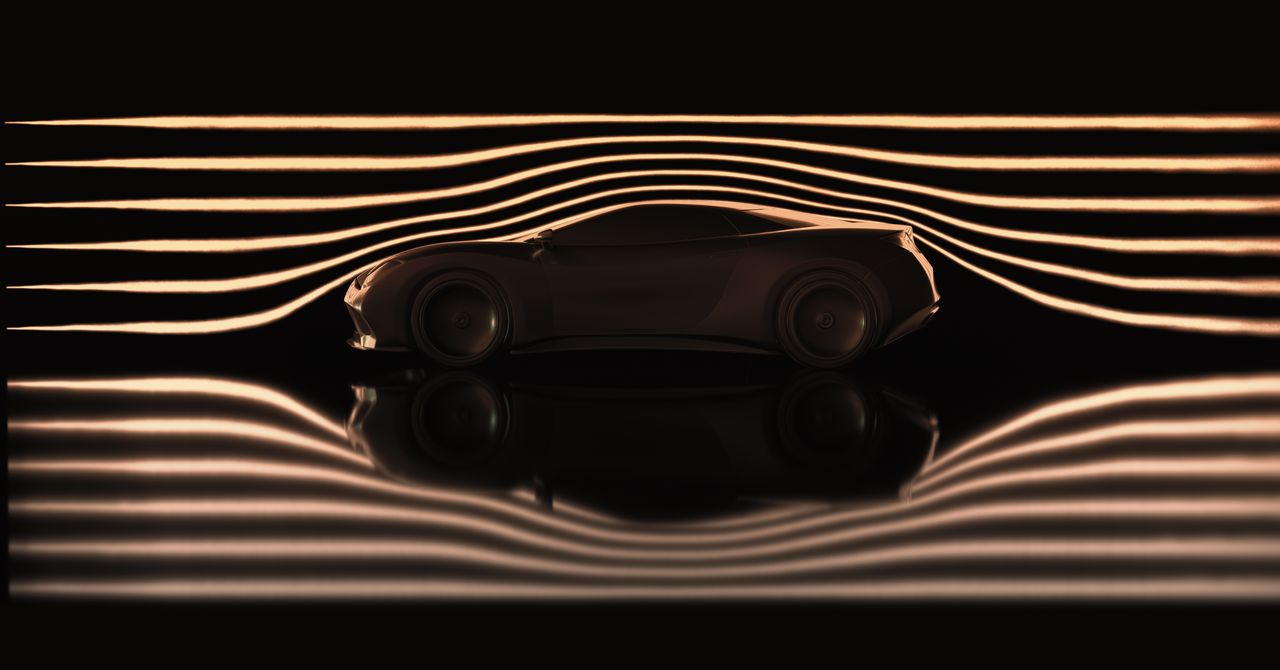
Drag is caused by two forces: pressure differential and skin friction. Most bluff bodies are dominated by pressure drag due to flow separation, e.g. regular cars. Flow separation is disadvantageous because it creates a low pressure region in the back which doesn’t counteract the high pressure region at the front. Turbulence delays flow separation, thereby reducing drag. Note, the transition from laminar to turbulent flow creates a sudden drop in drag known as the “drag crisis” which golf balls take advantage of via dimples to travel farther. However, turbulent flow also causes greater skin friction, so it can be a balancing act. Some surfaces, such as airplane wings, use “trippers” to force turbulence at a certain point downwind to get the best of both worlds, i.e. laminar flow at the front to minimize skin friction and turbulent flow at the tail to delay separation.