

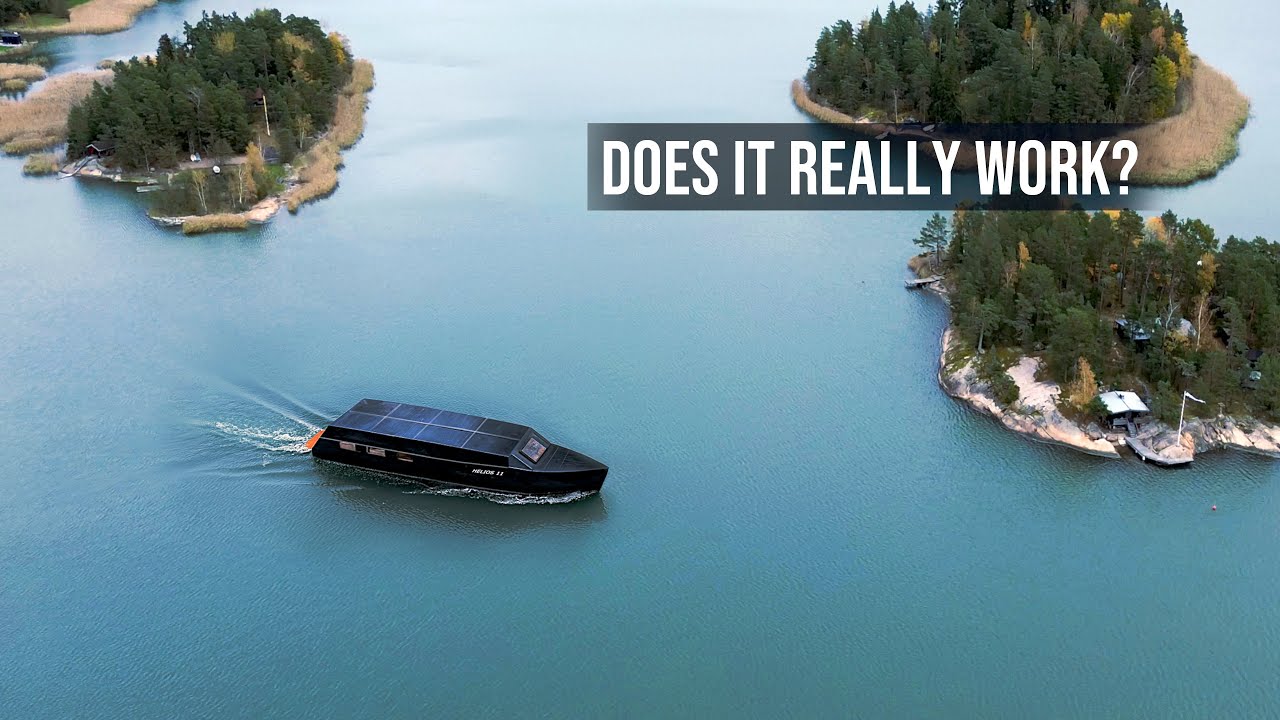
So i thought this fits here, he calls the boat Helios 11 and builds it with very little experience. He docunents the adventure quite well and shares what he learns, and also shares all the plans for the boat for free.
So i thought this fits here, he calls the boat Helios 11 and builds it with very little experience. He docunents the adventure quite well and shares what he learns, and also shares all the plans for the boat for free.
A single-hull can be made self-righting, in case it flips in bad weather. A 35 foot catamaran? You’re not getting that back up-right with a crew of one - you basically hope and pray a bigger boat comes along at that point.
… Now I’ve watched the video, there is no ballast, not even a dedicated bilge space, and with the shallow draft, I am uncertain how the boat in OOP isn’t too top-heavy to stay up-right. Forget the “Sovereign Living” bit at the end, I’mma need to see some solid design and build data before listening to another word from that guy.
In short: I take back any mean things I said or implied about Catamarans.
I was just stanning one of my favorite things about, and pet criteria for, properly-designed boats. I just sold my first sail-boat because I wanted a bigger one, with a better capsize-rating.
Except that the risk of a 35 foot catamaran flipping over is very significantly lower in the first place.
Depends where you sail, but I’ve made some edits to that comment since anyways.
He does end up adding ballast later. Added batteries, living stuff and about 150KG of rocks.
His takeaway was that it didn’t really affect cruising speed and that he should have made a sturdier, heavier bottom hull.
Edit: he’s in the process of turning it into a trimaran at the moment also for stability.
Don’t worry, he said up front it is “rated for cross-atlantic” so it’s all good.