Would also require an isolation switch to be effective. With a grid-tied solar install it’s going to dump all of the energy into the grid, and during a power outage that energy will simply not be collected.
I could see that becoming a thing where during a power outage you flip a switch near the electrical panel and then every green-colored outlet will run entirely off the solar panels when the sunlight is available. Or if we really want to make it technical solution, create special outlets that are dual power (grid and direct from solar) and then appliances plugged into these special outlets will switch between power sources as they’re available. Potentially some issues with two different AC circuits touching depending on how it’s implemented on the appliance side, but it could be a good solution especially if the controller can still backfeed excess energy production back into the grid
We already have hybrid inverters that does that automatically, you don’t even need a different circuit or special outlets. It can manage all the grid ties, off grid and battery parameters on the fly
Well shit that’s awesome! Like I’m kinda curious how it handles the load exceeding capacity, but I suppose if you just turn everything off that should probably be fine
As in what happens if you plug too much stuff that it exceeds your solar production?
I’ll use mine as an example, but it might be different with different models and configurations:
Inverter can handle up to 10kw
If solar production is at 5kw, and home is demanding 7kw, in my case, I have it set up as to draw the remaining 2kw from the battery, if battery is depleted, it will draw 2kw from the utility company
If home demands more than 10kw that the inverter can handle, it will trip the internal inverter protection or a circuit breaker leading to it
You don’t need that switch. There are already automatic switches. And if you have batteries you can load them from the panels and, in case they go too low, from the grid and then use the batteries to power your house.
I want to do something like that but just have the solar circuits entirely disconnected from the grid, running stuff like fridge, freezer, water heater, car charger, etc (depends how many watts my panels can actually manage in practice; I don’t have a ton of space). all without being able to draw from the grid at all.
My state is pretty shitty about solar, and I don’t particularity want to give the electric company my surplus power for free for them to turn around and profit from, so fuck ‘em, ill figure out how to perfectly balance my use with my capacity and just save the spend.
Yes, thats exactly what they do. No net metering, no discounts or rebates, nothing, but if your power flows back into the grid, they sure will charge for it at the exact same rate as if they created it themselves, and charge you as much as they can get away with to eat into your savings (some utilities around here even make you pay a monthly fee to have your own solar on “their” grid…). No surprise hardly anyone here has solar; it’s generally not worth having unless you can guarantee you use all of the power yourself.
My locality is mostly hydro power, we don’t even really have peak/off-peak rates, just pay the same all the time regardless because they can’t easily adapt to demand anyway. And like yay renewables and stuff, I’m super on board with that aspect, but I’m not on board with having a monopoly on the renewables, since my area is not typical of the state.
That’s absurd. People should use repurposed EV batteries and just power their homes on solar without connecting to the grid. I get that it’s probably a legal requirement to connect your solar to the grid, but that’s bullshit and nothing short of state-sanctioned theft.
I’m technically too urban to be entirely off-grid, legally, but I see no reason I can’t minimize my draw with a separate breaker system. Whole place needs to be rewired anyway because it’s ancient. Knot and tube ancient.
But most people aren’t willing to go through that, and I cant blame them because there aren’t any incentives to doing so, and most people don’t realize how much cheaper used solar farm panels are, so it just seems like a really bad deal. And for most, who would have it installed for them, new, maybe thats true. Used with mostly-self-install is much cheaper. Even better if the whole deal needs to be re-wired anyway.


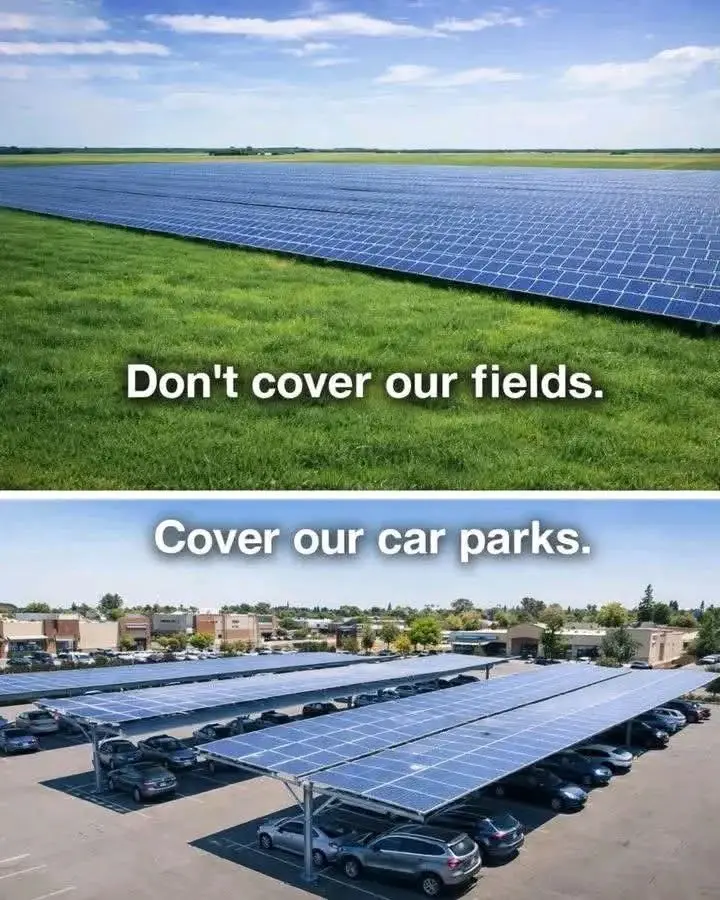
Would also require an isolation switch to be effective. With a grid-tied solar install it’s going to dump all of the energy into the grid, and during a power outage that energy will simply not be collected.
I could see that becoming a thing where during a power outage you flip a switch near the electrical panel and then every green-colored outlet will run entirely off the solar panels when the sunlight is available. Or if we really want to make it technical solution, create special outlets that are dual power (grid and direct from solar) and then appliances plugged into these special outlets will switch between power sources as they’re available. Potentially some issues with two different AC circuits touching depending on how it’s implemented on the appliance side, but it could be a good solution especially if the controller can still backfeed excess energy production back into the grid
We already have hybrid inverters that does that automatically, you don’t even need a different circuit or special outlets. It can manage all the grid ties, off grid and battery parameters on the fly
Well shit that’s awesome! Like I’m kinda curious how it handles the load exceeding capacity, but I suppose if you just turn everything off that should probably be fine
As in what happens if you plug too much stuff that it exceeds your solar production?
I’ll use mine as an example, but it might be different with different models and configurations:
Inverter can handle up to 10kw
If solar production is at 5kw, and home is demanding 7kw, in my case, I have it set up as to draw the remaining 2kw from the battery, if battery is depleted, it will draw 2kw from the utility company
If home demands more than 10kw that the inverter can handle, it will trip the internal inverter protection or a circuit breaker leading to it
You don’t need that switch. There are already automatic switches. And if you have batteries you can load them from the panels and, in case they go too low, from the grid and then use the batteries to power your house.
I want to do something like that but just have the solar circuits entirely disconnected from the grid, running stuff like fridge, freezer, water heater, car charger, etc (depends how many watts my panels can actually manage in practice; I don’t have a ton of space). all without being able to draw from the grid at all.
My state is pretty shitty about solar, and I don’t particularity want to give the electric company my surplus power for free for them to turn around and profit from, so fuck ‘em, ill figure out how to perfectly balance my use with my capacity and just save the spend.
With the current prices of panels you might install a few more than needed.
That’s so fucked up. Even people who install solar have to give free energy to the utility company, who probably still charge them for energy…
Yes, thats exactly what they do. No net metering, no discounts or rebates, nothing, but if your power flows back into the grid, they sure will charge for it at the exact same rate as if they created it themselves, and charge you as much as they can get away with to eat into your savings (some utilities around here even make you pay a monthly fee to have your own solar on “their” grid…). No surprise hardly anyone here has solar; it’s generally not worth having unless you can guarantee you use all of the power yourself.
My locality is mostly hydro power, we don’t even really have peak/off-peak rates, just pay the same all the time regardless because they can’t easily adapt to demand anyway. And like yay renewables and stuff, I’m super on board with that aspect, but I’m not on board with having a monopoly on the renewables, since my area is not typical of the state.
That’s absurd. People should use repurposed EV batteries and just power their homes on solar without connecting to the grid. I get that it’s probably a legal requirement to connect your solar to the grid, but that’s bullshit and nothing short of state-sanctioned theft.
Exactly why basically that is my goal :)
I’m technically too urban to be entirely off-grid, legally, but I see no reason I can’t minimize my draw with a separate breaker system. Whole place needs to be rewired anyway because it’s ancient. Knot and tube ancient.
But most people aren’t willing to go through that, and I cant blame them because there aren’t any incentives to doing so, and most people don’t realize how much cheaper used solar farm panels are, so it just seems like a really bad deal. And for most, who would have it installed for them, new, maybe thats true. Used with mostly-self-install is much cheaper. Even better if the whole deal needs to be re-wired anyway.