The infrastructure to build a load-bearing roof over a parking lot is significantly more than the concrete footings and supports needed to hold ground-based solar. There are some public lots near me that have solar roofs over them. When I park there I almost feel like I’m pulling into an underground parking garage.
I’m not an expert by any means, but every commercial solar install I’ve seen over public parking lots has included steel beam construction mounted on reinforced concrete footings that extend 2+ feet above ground. The concrete footings appear to be designed not only to support the structure but to be able to absorb the impact of cars that might otherwise dent/bend the steel supports. A few examples:
The electrical infrastructure to support these is also significantly more than a residential solar setup. I have 44 panels on my roof, and I counted around 488 on one of these carports. I can generate around 85 kWh on a clear day, so one of these can probably generated 1000 kWh or more. You’ll need good electrical infrastructure to safely manage that and feed it into the grid. I didn’t need any infrastructure changes when my solar panels were installed other than a new utility meter. These all likely required a lot more than that.
Right, but there shouldn’t be any additional structural requirements to build a carport with solar panels vs one without. The steel beam construction is more than sufficient. Any electrical infrastructure, apart from wires to the panels, doesn’t need to be on the roof.
The count of panels on a wood frame house vs steel structure really isn’t something you can compare.


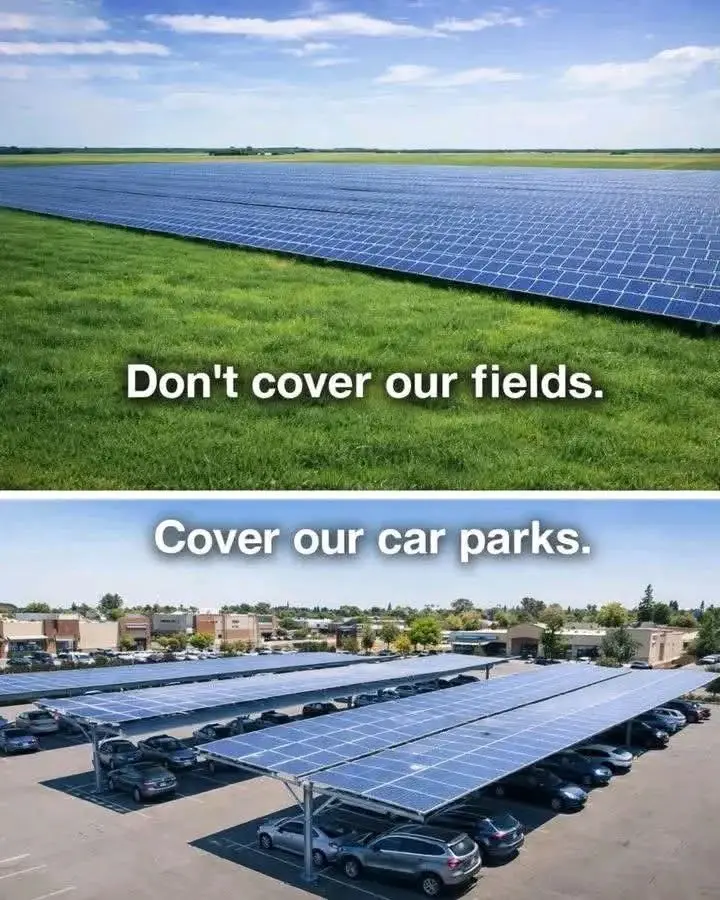
Why would it be way more expensive? Sure, you’ll have to put it on poles, but…
The infrastructure to build a load-bearing roof over a parking lot is significantly more than the concrete footings and supports needed to hold ground-based solar. There are some public lots near me that have solar roofs over them. When I park there I almost feel like I’m pulling into an underground parking garage.
Not to mention… Much lower chance of some idiot ramming their car into the structure if it is out on a field somewhere.
But solar panels wouldn’t add a significant load. Pretty much any standard metal carport roof could support them.
I’m not an expert by any means, but every commercial solar install I’ve seen over public parking lots has included steel beam construction mounted on reinforced concrete footings that extend 2+ feet above ground. The concrete footings appear to be designed not only to support the structure but to be able to absorb the impact of cars that might otherwise dent/bend the steel supports. A few examples:
https://maps.app.goo.gl/fcQ9PUoWp68c21n57
https://maps.app.goo.gl/QqbmVsphByzN5Xi56
https://maps.app.goo.gl/n3wUKkYZLMCpzVTz5
The electrical infrastructure to support these is also significantly more than a residential solar setup. I have 44 panels on my roof, and I counted around 488 on one of these carports. I can generate around 85 kWh on a clear day, so one of these can probably generated 1000 kWh or more. You’ll need good electrical infrastructure to safely manage that and feed it into the grid. I didn’t need any infrastructure changes when my solar panels were installed other than a new utility meter. These all likely required a lot more than that.
Right, but there shouldn’t be any additional structural requirements to build a carport with solar panels vs one without. The steel beam construction is more than sufficient. Any electrical infrastructure, apart from wires to the panels, doesn’t need to be on the roof.
The count of panels on a wood frame house vs steel structure really isn’t something you can compare.
Solar had pretty high wind loads that need to be supported
The actual panels are no longer the most expensive part of an install.