

- cross-posted to:
- linux@programming.dev
- cross-posted to:
- linux@programming.dev
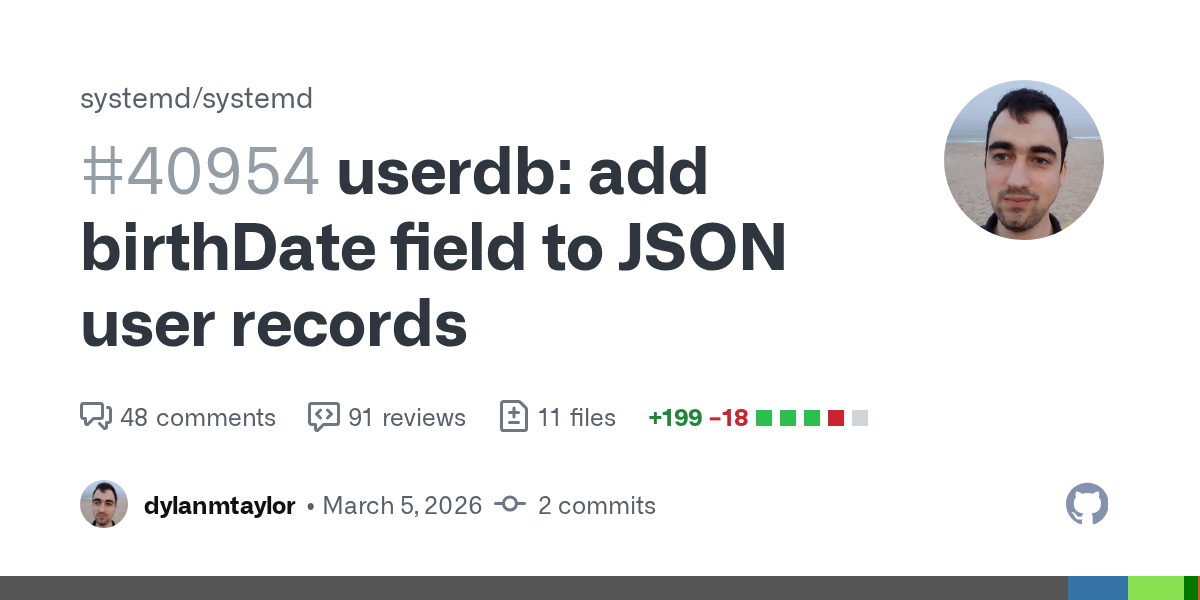
Fork time? Maybe all the anti-systemd zealots were right all along…
Edit: To address whether it is likely that this change will affect users: Gnome is planning a stronger dependence on userdb, the part of systemd where this change is being implemented. https://blogs.gnome.org/adrianvovk/2025/06/10/gnome-systemd-dependencies/
Final Edit: The PR has been merged into main.
Most distributions use systemd but there are still distros and other unix-like operating systems that are using something else. However, they are not “user friendly” and will probably not be what most people are looking for.
Slackware uses its own init system and never used systemd but it has the reputation of being difficult to use. Gentoo also lets users choose between systemd and OpenRC. Alpine Linux uses OpenRC too. There’s more than a dozen distros not using systemd, but again, probably not what most people want to use. It’s also possible to replace systemd with OpenRC on some distros, but it possibly, probably, might cause some quirks.
Otherwise, there are other unix-like operating systems. Debian GNU Hurd also has its own init system but it’s not using the Linux kernel, so it’s a different beast. OpenBSD and FreeBSD also have their own init system, but not Linux. And AFAIK there’s no such thing as modern gaming on those.
There are ways not to use systemd, but realistically speaking, it will probably not be worth it unless you’re really militant about this. I started with Slackware at the end of the 90ies, I know how to compile a kernel, and tried GNU Hurd at some point, but I will not change something unless it’s really implemented deeper into the general software. It’s frustrating that the systemd devs are “collaborating”, but we’ll see what happens after a few rounds of updates.