

- cross-posted to:
- opensource@programming.dev
- cross-posted to:
- opensource@programming.dev
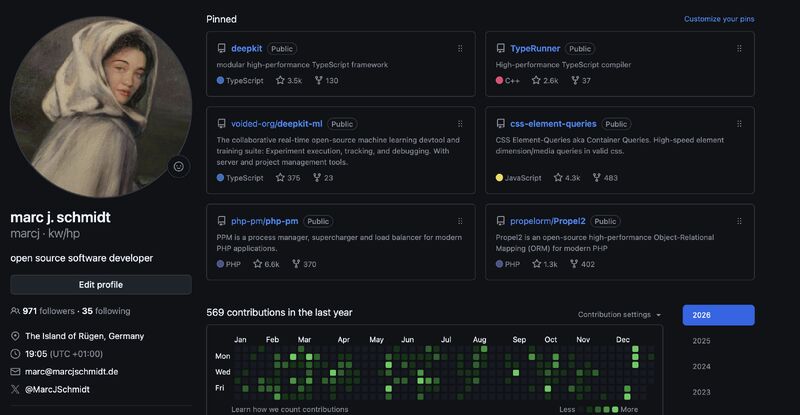
All my new code will be closed-source from now on. I’ve contributed millions of lines of carefully written OSS code over the past decade, spent thousands of hours helping other people. If you want to use my libraries (1M+ downloads/month) in the future, you have to pay.
I made good money funneling people through my OSS and being recognized as expert in several fields. This was entirely based on HUMANS knowing and seeing me by USING and INTERACTING with my code. No humans will ever read my docs again when coding agents do it in seconds. Nobody will even know it’s me who built it.
Look at Tailwind: 75 million downloads/month, more popular than ever, revenue down 80%, docs traffic down 40%, 75% of engineering team laid off. Someone submitted a PR to add LLM-optimized docs and Wathan had to decline - optimizing for agents accelerates his business’s death. He’s being asked to build the infrastructure for his own obsolescence.
Two of the most common OSS business models:
- Open Core: Give away the library, sell premium once you reach critical mass (Tailwind UI, Prisma Accelerate, Supabase Cloud…)
- Expertise Moat: Be THE expert in your library - consulting gigs, speaking, higher salary
Tailwind just proved the first one is dying. Agents bypass the documentation funnel. They don’t see your premium tier. Every project relying on docs-to-premium conversion will face the same pressure: Prisma, Drizzle, MikroORM, Strapi, and many more.
The core insight: OSS monetization was always about attention. Human eyeballs on your docs, brand, expertise. That attention has literally moved into attention layers. Your docs trained the models that now make visiting you unnecessary. Human attention paid. Artificial attention doesn’t.
Some OSS will keep going - wealthy devs doing it for fun or education. That’s not a system, that’s charity. Most popular OSS runs on economic incentives. Destroy them, they stop playing.
Why go closed-source? When the monetization funnel is broken, you move payment to the only point that still exists: access. OSS gave away access hoping to monetize attention downstream. Agents broke downstream. Closed-source gates access directly. The final irony: OSS trained the models now killing it. We built our own replacement.
My prediction: a new marketplace emerges, built for agents. Want your agent to use Tailwind? Prisma? Pay per access. Libraries become APIs with meters. The old model: free code -> human attention -> monetization. The new model: pay at the gate or your agent doesn’t get in.
I’m conflicted on this post. OSS does a lot of good as a whole, but regardless of monetization, I don’t want any of my work training an AI. I can respect that portion of his opinion.
His opinion is actually that AI can use his code no problem, they just have to pay a fee.
The problem is that the big LLM AI companies will just say… ‘Fuck off’, because they don’t like paying for any data, and they also think their models will be advanced enough to write their own libraries soon (if not now, depending how much they believe their own marketing hype).
Pricing is an additional unanswered problem in his new model. As a hypothetical: if 1000 traditional OSS users generate $1000 value in conversion to paid users in his old model - what would an AI license cost? Because one license (eg to Anthropic/Claude) would theoretically be cutting off millions of users, maybe 80%+ of his userbase. Would he ask for millions as a licensing fee?
Whole idea is half-baked IMO, but I am sympathetic to the bullshit situation he finds himself in.
You’re right. Personally, I’d rather support FOSS development. His justification isn’t 100% right but some of the idea resonates with me.
I think this model, however it may work will still be better than what we have currently though. If we can even attempt to charge AI-companies for the training data, that would be a huge step. Because the current model is just they take everything, that they can get their hands on.
And if that makes AI-devellopment ecomically unviable, that’s a really good thing