Responsible use of llms can’t be achieved. Can you verify that all of your training data are square with its creators? If not, how is that responsible?
You can’t verify that with humans either. Someone who has seen licensed code, whether proprietary or GPL, will accidentally reproduce snippets of it to accomplish similar tasks in the future.
It can if you control the training data, or if the data is public domain.
But I get your point. You can say all the Diamonds you use are conflict free, but out of the thousands you have, how do you know some have not slipped in.
At what point do you say you did a good enough job, and at what point is it too contaminated?
Like many things, it difficult to draw a line, so its up to communities to set a reasonable standard.
I think the question can be summarized as “do companies have an obligation of mean or an obligation of result in searching for similar code.”
I unless you have a search engine that can search all code across all repository, public or not, it is pretty hard to ask for an obligation of result.
Moreover, in many countries you cannot copyright the code itself, but you can copyright complete algorithm (RSA would be a good example, but not the code implementation itself), or a specific feature (minigames during loading time).
Note that I do not say itis right to do so, I’m all for opensource softwares, but I take into account that some people make a living from their inventions, so I’m generally in favor of limited copyright protection (in terms of both duration and scope).
An invention property, a software engineer code, or anything like that, should be shared by both the inventor (for inventing it in the firstplace), and the one financing it (for paying for it), at least until it pays back the money invested.
I have always thought that copyright on code is a bit pointless. Its like copyrighting engineering formulas and calculations. Given a particular problem, there are obvious solutions. The process should not be copyrightable.
I am also anti-copyrighting of features and ideas.
The only thing that should be copyrightable is the result of an technological or human investment, not the process and method for getting there.
That and copyright protection period should be shorter and non renewable.
Idealy feature or idea shouldn’t be copyrightable, but to acheive that we have to find ways to make sure those who work on those new featurea and idea can live decently.
If you work for years on something new, to see it immediately copied by someone who drown your product with cheaper copies, that’d kinda be disheartening for anyone.
What I think would be ideal would be a standard license fee. One cannot prevent other from copying that idea, but one has to pay a reasonable sum to the owner of the idea until the R&D costs are paid (maybe a bit more so it can grow and invest in costlier invention), after which it becomes public domain.
In all cases, credits are to be given to the inventor, a way or another.
Code should’ve never been copyrightable from the start. It’s basically the compute equivalent of a recipe. That aside, almost all modern transformer models are trained on generated data by this point, how would we even apply traditional copyright to that? Whole thing needs tossed and retooled. Entire economic system with it tbh, just slows innovation, and despite what you might believe it doesn’t protect the little guy, it just allows massive corporate conglomerates to buy up everything and control for what will be pretty much the extent of your lifetime.
algorithms and processes are not copyrightable. Code is an expression of algorithms, and thus is copyrightable. If anything, that’s the stance that the entire movements of Free Software and Open Source are going with to function, so this sounds not a good idea even if it is a good ideal.
They’re moving to this as it’s the only defense against oppression, but copy left was intentionally designed to combat copyright because the core founders of open source disagreed with it and the oppression it was causing in the software development community. Imagine if a recipe for Chilli dogs was copyrightable, but not the concept of Chilli dogs. That’s downright silly.
I disagree. I would say both are incomplete comparisons because code is special, it has limitations, it relies on underlying hardware support, and it’s implementing, generally, functionality not anything creative. I don’t have to present a good solution though in order to point out something is broken, I leave that for those more intelligent than I, but copyright is objectively a poor answer to code and is not comparable to an expressive artistic written work.
It’s honestly a bit of both. Creativity can be expressed in the intermediate steps in order to provide a subjectively superior approach (durably optimal until someone identifies a better approach), but fundamentally the design goal is “achieve X with minimal risk and waste”. That’s the part where I agree with you: gatekeeping an outcome is dumb. That said, the expressions of those intermediate steps genuinely land in the territory of creativity. That’s how we end up with new algorithms. Creativity is how we arrive at the optimal algorithms.
Even so, gatekeeping those intermediate techniques is bad for the same reasons as gatekeeping the end state. If they can be independently arrived at (like flourishes that personalize a recipe or alter it for particular food pairings), the end result is still stifling innovation and closing access to the tools everyone has access to.
Edit: Ultimately I think this means everyone should have access, unequivocally. The problem is that LLMs are financially gatekept and implemented at environmentally predatory scales, with unregulated supply chain bottlenecks that choke out the more environmentally friendly and consumer accessible tech that was in the pipeline.
Coding is a creative task, there are many many many solutions to any problem, and some problems are a lot more abstract to where even the problem can be different for different people. Like if there’s a problem with the users interacting with part of the software, you could try to make it easier to interact with, have a little tutorial, decorate it, make it look good, you know, a form of art, you could also try to make it more intuitive, also a form of art. It’s not typically what you’d think about, but coding is a rather creative task and everyone has different ways to go about problems, and those different ways are the different styles of programming people have.
Coding isn’t creative though. There’s an optimum solution to every problem, the layer above the code may be some form of art that needs protected but the code itself is just a recipe.
This is not an optimal solution to every problem lol. That’s like saying there’s an optimal way of telling someone stuff. There often is no optimal solution outside of very narrow scopes, as optimal isn’t a set thing lol. The code is itself expression that should be protected.
Code is rather expressive, it’s copyright-able for good reason, you can often tell who wrote what via the style and the way the code was written, and the methods used.
I disagree entirely. I grew up when the conversation around if code should even be copyrightable was happening, and at the time to an extent it made some sense, but the entire copy left movement was intended to combat the copyright of code in the name of open source because copy righting code is both stupid and baseless. Imagine if for loops were copyrighted? That’s what you’re essentially arguing unless there’s some sort of vague subjective measure you’re using to determine when something is copyrightable. The entire thing is just oppressive and does not help the people involved that actually deserve benefit and protection. I’m not saying to cut lose and allow rampant theft but copyright as currently designed and implemented is objectively broken and untooled to the tasks of today, stifling innovation and protecting corporate interests above creators and actual developers.
Copyleft is a form of copyright, if you’re against copyright that’s MIT/BSD 0 clause. Also languages aren’t typically copyrighted, it’s works created within those languages. Although I do agree copyright is kinda very broken, but creators of code do deserve protections, as code is very expressive. I am also a FOSS dev who loves copyleft, which only functions under copyright.


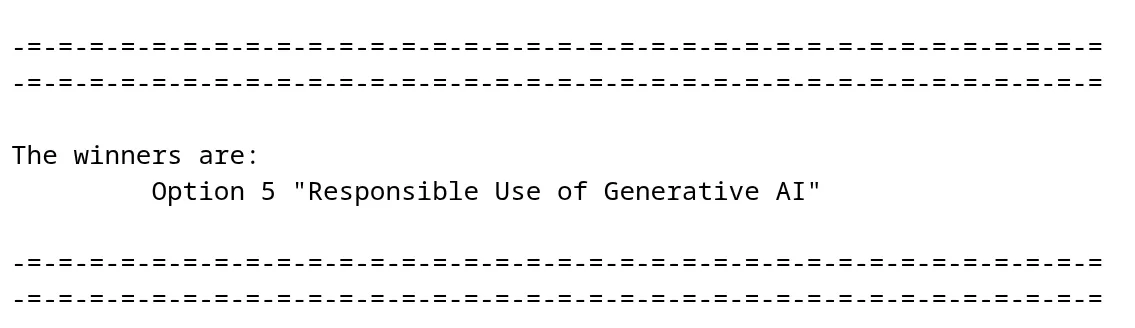
Responsible use of llms can’t be achieved. Can you verify that all of your training data are square with its creators? If not, how is that responsible?
You can’t verify that with humans either. Someone who has seen licensed code, whether proprietary or GPL, will accidentally reproduce snippets of it to accomplish similar tasks in the future.
Can you verify that it didn’t reproduce any code that’s proprietary or has more restrictive licenses than your own?
That’s the main issue for FOSS.
The complement/ reverse is true for companies that produce proprietary software (but they won’t care, sure.)
It can if you control the training data, or if the data is public domain.
But I get your point. You can say all the Diamonds you use are conflict free, but out of the thousands you have, how do you know some have not slipped in.
At what point do you say you did a good enough job, and at what point is it too contaminated?
Like many things, it difficult to draw a line, so its up to communities to set a reasonable standard.
I think the question can be summarized as “do companies have an obligation of mean or an obligation of result in searching for similar code.”
I unless you have a search engine that can search all code across all repository, public or not, it is pretty hard to ask for an obligation of result.
Moreover, in many countries you cannot copyright the code itself, but you can copyright complete algorithm (RSA would be a good example, but not the code implementation itself), or a specific feature (minigames during loading time).
Note that I do not say itis right to do so, I’m all for opensource softwares, but I take into account that some people make a living from their inventions, so I’m generally in favor of limited copyright protection (in terms of both duration and scope).
An invention property, a software engineer code, or anything like that, should be shared by both the inventor (for inventing it in the firstplace), and the one financing it (for paying for it), at least until it pays back the money invested.
I have always thought that copyright on code is a bit pointless. Its like copyrighting engineering formulas and calculations. Given a particular problem, there are obvious solutions. The process should not be copyrightable.
I am also anti-copyrighting of features and ideas.
The only thing that should be copyrightable is the result of an technological or human investment, not the process and method for getting there.
That and copyright protection period should be shorter and non renewable.
I think we mostly agree on that.
Idealy feature or idea shouldn’t be copyrightable, but to acheive that we have to find ways to make sure those who work on those new featurea and idea can live decently.
If you work for years on something new, to see it immediately copied by someone who drown your product with cheaper copies, that’d kinda be disheartening for anyone.
What I think would be ideal would be a standard license fee. One cannot prevent other from copying that idea, but one has to pay a reasonable sum to the owner of the idea until the R&D costs are paid (maybe a bit more so it can grow and invest in costlier invention), after which it becomes public domain.
In all cases, credits are to be given to the inventor, a way or another.
how about making an effort in the first place? to at least make an effort to list all repository thats being used as training data.
Thats a good one. Sounds like a good start for some legislation.
Code should’ve never been copyrightable from the start. It’s basically the compute equivalent of a recipe. That aside, almost all modern transformer models are trained on generated data by this point, how would we even apply traditional copyright to that? Whole thing needs tossed and retooled. Entire economic system with it tbh, just slows innovation, and despite what you might believe it doesn’t protect the little guy, it just allows massive corporate conglomerates to buy up everything and control for what will be pretty much the extent of your lifetime.
algorithms and processes are not copyrightable. Code is an expression of algorithms, and thus is copyrightable. If anything, that’s the stance that the entire movements of Free Software and Open Source are going with to function, so this sounds not a good idea even if it is a good ideal.
They’re moving to this as it’s the only defense against oppression, but copy left was intentionally designed to combat copyright because the core founders of open source disagreed with it and the oppression it was causing in the software development community. Imagine if a recipe for Chilli dogs was copyrightable, but not the concept of Chilli dogs. That’s downright silly.
A more fair comparison would be written works being copyright-able, which code is a written work, a large, expressive, written work
I disagree. I would say both are incomplete comparisons because code is special, it has limitations, it relies on underlying hardware support, and it’s implementing, generally, functionality not anything creative. I don’t have to present a good solution though in order to point out something is broken, I leave that for those more intelligent than I, but copyright is objectively a poor answer to code and is not comparable to an expressive artistic written work.
It’s honestly a bit of both. Creativity can be expressed in the intermediate steps in order to provide a subjectively superior approach (durably optimal until someone identifies a better approach), but fundamentally the design goal is “achieve X with minimal risk and waste”. That’s the part where I agree with you: gatekeeping an outcome is dumb. That said, the expressions of those intermediate steps genuinely land in the territory of creativity. That’s how we end up with new algorithms. Creativity is how we arrive at the optimal algorithms.
Even so, gatekeeping those intermediate techniques is bad for the same reasons as gatekeeping the end state. If they can be independently arrived at (like flourishes that personalize a recipe or alter it for particular food pairings), the end result is still stifling innovation and closing access to the tools everyone has access to.
Edit: Ultimately I think this means everyone should have access, unequivocally. The problem is that LLMs are financially gatekept and implemented at environmentally predatory scales, with unregulated supply chain bottlenecks that choke out the more environmentally friendly and consumer accessible tech that was in the pipeline.
Coding is a creative task, there are many many many solutions to any problem, and some problems are a lot more abstract to where even the problem can be different for different people. Like if there’s a problem with the users interacting with part of the software, you could try to make it easier to interact with, have a little tutorial, decorate it, make it look good, you know, a form of art, you could also try to make it more intuitive, also a form of art. It’s not typically what you’d think about, but coding is a rather creative task and everyone has different ways to go about problems, and those different ways are the different styles of programming people have.
Coding isn’t creative though. There’s an optimum solution to every problem, the layer above the code may be some form of art that needs protected but the code itself is just a recipe.
This is not an optimal solution to every problem lol. That’s like saying there’s an optimal way of telling someone stuff. There often is no optimal solution outside of very narrow scopes, as optimal isn’t a set thing lol. The code is itself expression that should be protected.
Code is rather expressive, it’s copyright-able for good reason, you can often tell who wrote what via the style and the way the code was written, and the methods used.
I disagree entirely. I grew up when the conversation around if code should even be copyrightable was happening, and at the time to an extent it made some sense, but the entire copy left movement was intended to combat the copyright of code in the name of open source because copy righting code is both stupid and baseless. Imagine if for loops were copyrighted? That’s what you’re essentially arguing unless there’s some sort of vague subjective measure you’re using to determine when something is copyrightable. The entire thing is just oppressive and does not help the people involved that actually deserve benefit and protection. I’m not saying to cut lose and allow rampant theft but copyright as currently designed and implemented is objectively broken and untooled to the tasks of today, stifling innovation and protecting corporate interests above creators and actual developers.
Copyleft is a form of copyright, if you’re against copyright that’s MIT/BSD 0 clause. Also languages aren’t typically copyrighted, it’s works created within those languages. Although I do agree copyright is kinda very broken, but creators of code do deserve protections, as code is very expressive. I am also a FOSS dev who loves copyleft, which only functions under copyright.