Cooly hot. Or hotly cool.Follow-up video:https://youtu.be/fHPCS8j3cRMOther stuff:Technology Connections on Bluesky:https://bsky.app/profile/techconnectify.bs...
I picture a world where everything in the house runs off a single heat pump, and heat gets diverted from your A/C into your water heater and clothes dryer.
Well, try storing heat for later use. How do you do this as a temperature battery?
An efficient device like solar panels are still much much less effective without batteries. In the same vein, producing or moving heat right now doesn’t mean some other room or device needs the excess or inverse right now.
Nobody runs a dryer constantly, for example. If there’s barely any heat to pull when it is needed, how do you solve for that? Generating heat goes against the goal of recycling it with a central system.
We already have hot and cold water distribution. Most Swedish homes have central heating using hot water radiators, and central cooling is now starting to become a thing here. Any sink in a house has hot and cold water.
It’s absolutely possible to tie into this by making use of recirculation systems where you have constant flow of hot/cold water and every household source of heat or AC unit for cooling can tap into it (pun intended) to feed back generated heat or contribute to cooling. Then you use storage systems (thermal mass or thermoelectric generation) for the excess.
Yes but that hot water in your house has to be heated… And if it’s not connected to your AC then there’s no way for the cold being created to get back into your house. It’s just being dumped as waste energy into the atmosphere.
Central heating systems use recirculating hot water to spread meat from a central heater (which can be a heat pump) to multiple radiators. In theory there’s nothing preventing you from connecting other devices to that loop of recirculating hot water to use the heat from your central heating system for those too.
It would however add quite a bit of complexity to the devices and plumbing, which would also make both more expensive.
And it also wouldn’t really be worth it. Heat pumps get less efficient when the temperature difference between the hot and cold side gets larger. So while your air conditioning does indeed produce heat, dumping that heat into the outside air at ambient temperature is much more efficient (in terms of watts of heat moved per watt of electricity used) than trying to use it to heat up water to 50° or so to be used as heat source for a dryer.
Then there’s also the issue of balancing demand and supply of heat. Your dryer could only use excess heat from your air conditioning if both are running at the same time, so the devices need to be synchronised or you’d need heat storage, which adds additional complexity, expense and inefficiencies.
Devices that need heat also do not all need the same temperature. Your radiators, clothes dryer, dishwasher and so on all have different ideal temperatures, and because heating pump efficiency decreases as the temperature difference between the hot and cold sides increases it’s more efficient to run it with the lowest temperature delta that’s feasible. So it’s more efficient to just give each device that needs either heating or cooling its own heat pump (unless you have sets of identical devices which all need the same temperature and that can all be integrated in a single system, such as central heating radiators or floor heating zones). And the complexity involved in distributing heat between unrelated devices in your house makes giving them all their own heat pump likely the cheaper option too.
It’s possible to heat things like return water or cold water directly and then use heat exchangers.
Temperature differentials also doesn’t matter much because temperature doesn’t directly behave like voltage, if your hot source is too hot you simply use less hot water (lower flow). You’d likely end up with multiple heat pumps throughout a larger home, but each one can be smaller as they cooperate.
Here in Sweden we already always distribute to homes at 70-100°C and then at 50-55°C internally (again, with heat exchangers to minimize energy loss). And that works just fine. We just don’t (yet) have many systems which feed back thermal energy.
You can easily feed back to a central hot water tank, then let the central heater rest as another heatpump returns energy to it.


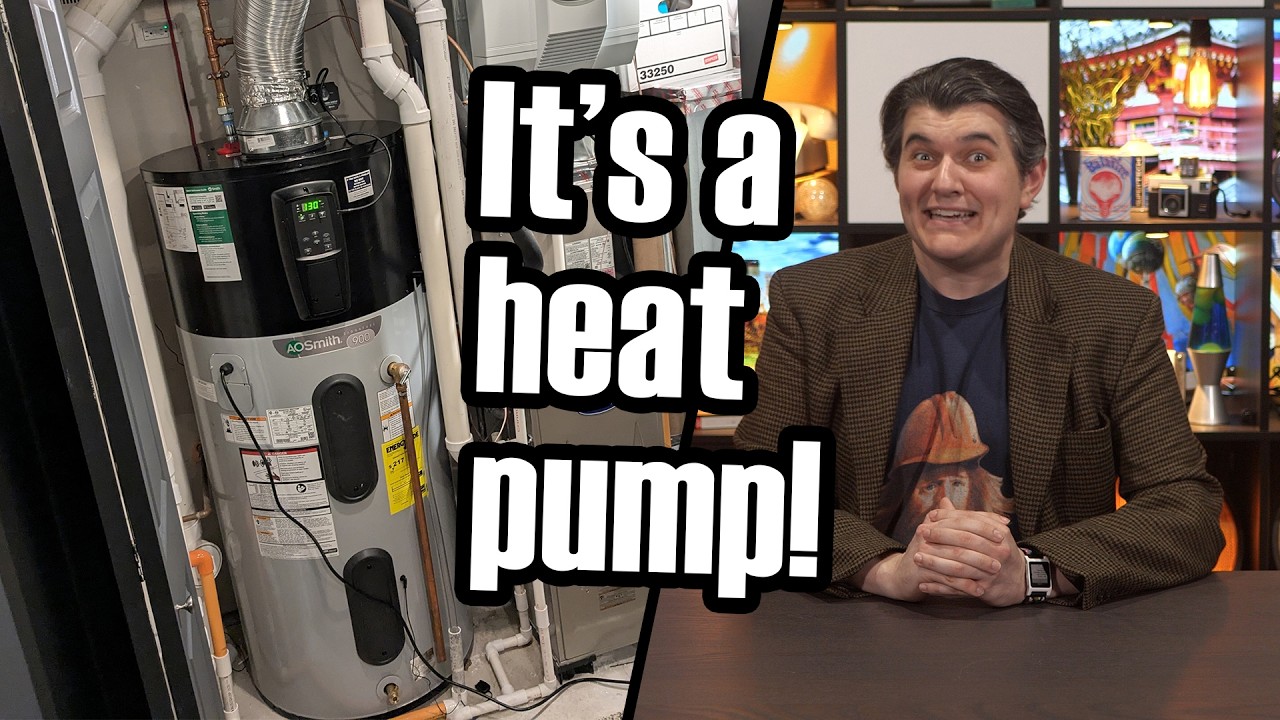
I picture a world where everything in the house runs off a single heat pump, and heat gets diverted from your A/C into your water heater and clothes dryer.
I assume the difficulty is the refrigerant plumbing? And integrating between different systems?
Well, try storing heat for later use. How do you do this as a temperature battery?
An efficient device like solar panels are still much much less effective without batteries. In the same vein, producing or moving heat right now doesn’t mean some other room or device needs the excess or inverse right now.
Nobody runs a dryer constantly, for example. If there’s barely any heat to pull when it is needed, how do you solve for that? Generating heat goes against the goal of recycling it with a central system.
Most houses have hot water tanks
I mean you’d have to basically build the whole house around it. And I’m not sure about the feasibility of moving heat around to more than 2 devices…
We already have hot and cold water distribution. Most Swedish homes have central heating using hot water radiators, and central cooling is now starting to become a thing here. Any sink in a house has hot and cold water.
It’s absolutely possible to tie into this by making use of recirculation systems where you have constant flow of hot/cold water and every household source of heat or AC unit for cooling can tap into it (pun intended) to feed back generated heat or contribute to cooling. Then you use storage systems (thermal mass or thermoelectric generation) for the excess.
Yes but that hot water in your house has to be heated… And if it’s not connected to your AC then there’s no way for the cold being created to get back into your house. It’s just being dumped as waste energy into the atmosphere.
Central heating systems use recirculating hot water to spread meat from a central heater (which can be a heat pump) to multiple radiators. In theory there’s nothing preventing you from connecting other devices to that loop of recirculating hot water to use the heat from your central heating system for those too.
It would however add quite a bit of complexity to the devices and plumbing, which would also make both more expensive.
And it also wouldn’t really be worth it. Heat pumps get less efficient when the temperature difference between the hot and cold side gets larger. So while your air conditioning does indeed produce heat, dumping that heat into the outside air at ambient temperature is much more efficient (in terms of watts of heat moved per watt of electricity used) than trying to use it to heat up water to 50° or so to be used as heat source for a dryer. Then there’s also the issue of balancing demand and supply of heat. Your dryer could only use excess heat from your air conditioning if both are running at the same time, so the devices need to be synchronised or you’d need heat storage, which adds additional complexity, expense and inefficiencies.
Devices that need heat also do not all need the same temperature. Your radiators, clothes dryer, dishwasher and so on all have different ideal temperatures, and because heating pump efficiency decreases as the temperature difference between the hot and cold sides increases it’s more efficient to run it with the lowest temperature delta that’s feasible. So it’s more efficient to just give each device that needs either heating or cooling its own heat pump (unless you have sets of identical devices which all need the same temperature and that can all be integrated in a single system, such as central heating radiators or floor heating zones). And the complexity involved in distributing heat between unrelated devices in your house makes giving them all their own heat pump likely the cheaper option too.
Systems that circulate ’ freon’ are fairly common in commercial buildings. They are complex to build and so don’t really make sense for houses.
It’s possible to heat things like return water or cold water directly and then use heat exchangers.
Temperature differentials also doesn’t matter much because temperature doesn’t directly behave like voltage, if your hot source is too hot you simply use less hot water (lower flow). You’d likely end up with multiple heat pumps throughout a larger home, but each one can be smaller as they cooperate.
Here in Sweden we already always distribute to homes at 70-100°C and then at 50-55°C internally (again, with heat exchangers to minimize energy loss). And that works just fine. We just don’t (yet) have many systems which feed back thermal energy.
You can easily feed back to a central hot water tank, then let the central heater rest as another heatpump returns energy to it.
Terrible redundancy
Geothermal systems can do that for water heaters, AC, and heat, so… They kinda already do that.
Geothermal doesn’t really work great in many situations for a lot of different reasons. That’s why heat pumps exist.
Which situations? This sounds like FUD.
They might mean ground source heat pumps?