Vultures have been shown to reduce the spread of dangerous infectious diseases at scale.
4 paragraph quote
From this perspective, each vulture species features peculiar skin microbiota compositions, likely involved in singular protective mechanisms of which characterization is yet highly desirable, acknowledging the potential implications under diverse applicative fields. Altogether, state-of-the-art knowledge pinpoints that the cutaneous microbiota constitutes a barrier of microbial, physical, chemical, and immunological nature for the skin [25]. Skin microorganisms represent the first physical barrier against exogenous microorganisms of environmental origin [25]. Here, pioneering microbial specimens promote physical hindrance against the secondary colonization of pathogenic specimens, aside from establishing direct connections with the host, aimed at regulating the differentiation process of keratinocytes [26]. By employing various mechanisms of resistance to colonization, such as competition for nutritional resources, direct inhibition, and/or interference with environmental survival [25], cutaneous microbiota enable, de facto, a microbial barrier that protects from the myriads of pathogenic microorganisms encountered in necrophagic activities [4]. Intriguingly, health-promoting strains of the Staphylococcus genera adopt fine mechanisms to antagonize pathogenic strains of the same genera (e.g., quorum sensing, antibiotic production, etc.) [27,28,29].
…
Vultures contribute significantly to maintaining ecosystem homeostasis. Part of their food intake is released as nutrients through their feces, promoting a cycle of nutrients that supports a healthy ecosystem [90]. From this perspective, efforts in the characterization of the fecal microbiota would elucidate the ecological service necrophagic birds provide to other animal species. Furthermore, vultures have been recognized for their public health benefits, primarily because they can efficiently dispose of vast quantities of inadequately managed carcasses, thereby maintaining adequate levels of hygiene in the ecosystem [5].
The pivotal role of the vultures’ unique ability to contain pathogens is attributed to the microbiota associated with the different anatomical districts of their bodies, with the cutaneous microbiota as the main actor [4]. Unlike other animals, vulture skin microbiota is the most populated in terms of microbial abundance and biodiversity. This is likely due to dietary style, since carcasses carry diverse and more specialized microbial communities, interfering with skin microbial development. It can be hypothesized that the taxa identified derive from the dead animal body, such as Methanobrevibacter smithii present in the intestinal district of the dead animals, or from environmental sources like, for example, Xanthomonas spp. and Actinobacillus pleuropneumoniae [4].
Genes identified in the facial region include elements correlated with putrescine [47], one of the main molecules produced in a decomposing carcass, confirming the influence that the carcass microbiota has on the assembly of the host’s microbiota. Further support for this hypothesis comes from the extensive functional diversity observed in microorganisms residing in the facial region. It has been observed that these range from producers of antimicrobials to normal intestinal bacteria and bacteria linked to plants and soil [4], agreeing that there is a significant influence from the environment and carcass on the composition of the facial microbiota. In this regard, determining the carcass microbiota would be necessary for further evaluation of this hypothesis.


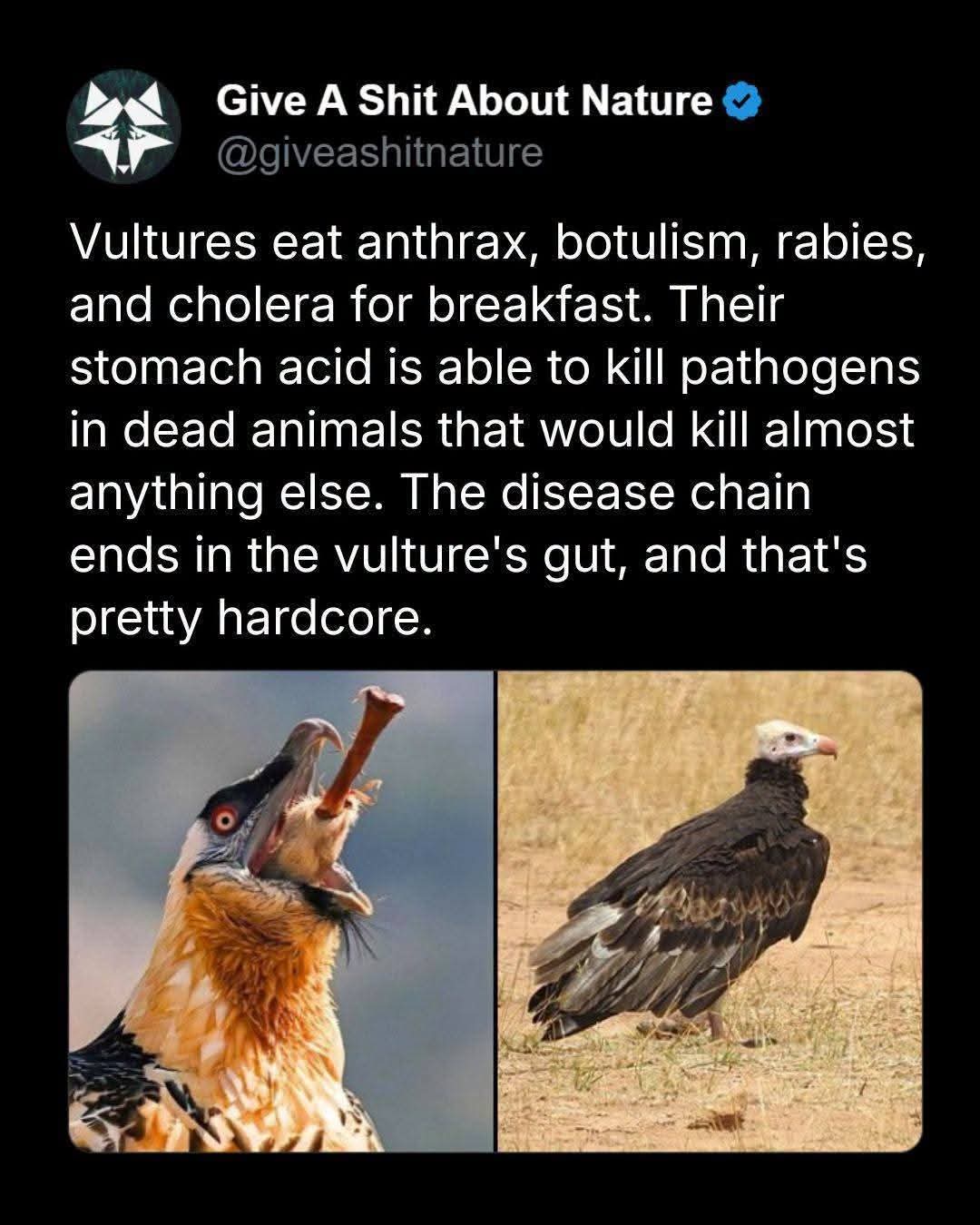
Vultures have been shown to reduce the spread of dangerous infectious diseases at scale.
4 paragraph quote
…
https://pmc.ncbi.nlm.nih.gov/articles/PMC12029367/