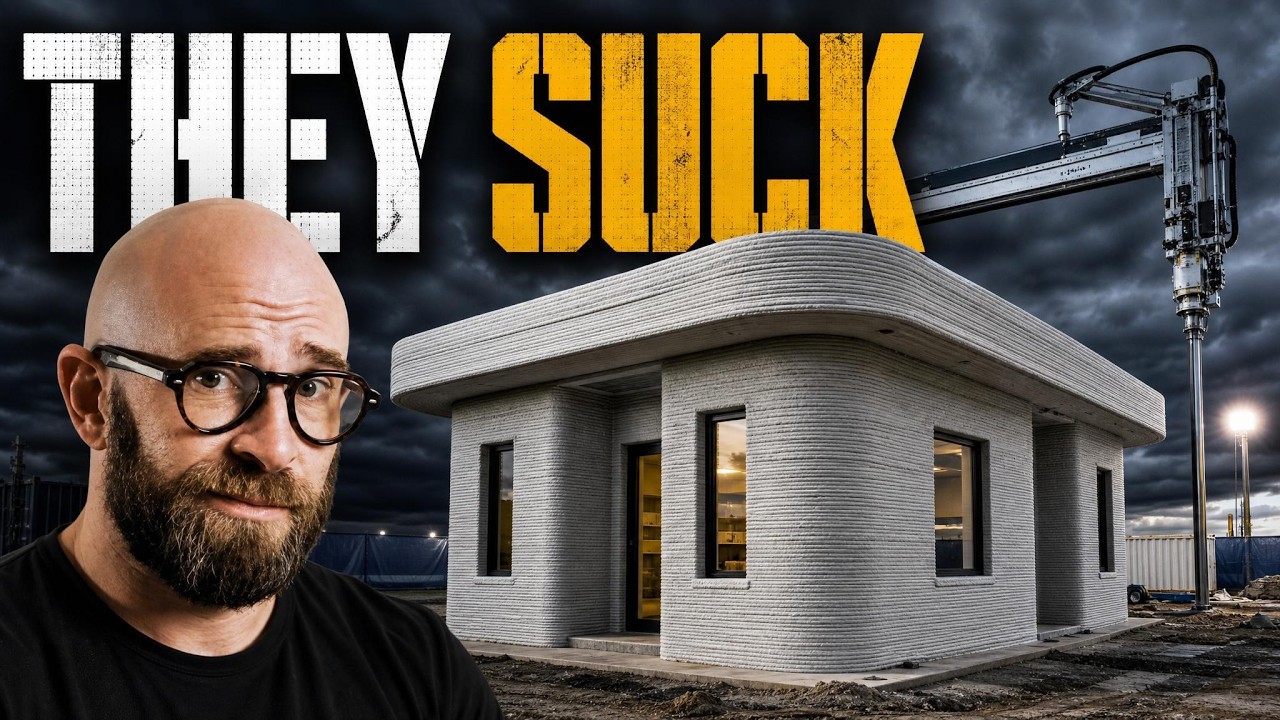
Can 3D-printed homes solve the housing crisis—or are they overhyped? Discover why groundbreaking projects failed, the engineering challenges, regulatory road...
The industry as a whole still has some kinks to work out.
Prefab parts are actually very common here in West and North European homes. Complete prefab houses too, factory made, very well insulated, using heat pumps and underfloor heating, built in plumbing and electrical systems. They do not use bricks but a combination of wood, steel, insulation materials and cladding and are built for a lifespan of around 75-100 years.
Most new subdivisions are assembled on site from prefab components like roof trellises. Many new subdivisions use identical houses with walls and floors premade, just assembled on site, far cheaper than 3D printing.


Prefab parts are actually very common here in West and North European homes. Complete prefab houses too, factory made, very well insulated, using heat pumps and underfloor heating, built in plumbing and electrical systems. They do not use bricks but a combination of wood, steel, insulation materials and cladding and are built for a lifespan of around 75-100 years.
Prefab houses are a thing here, too. I was still kicking around the idea of generating a house on site.
Americans have been buying single wide or double wide prefabs since WW2.
The tech has changed significant over the years as well, and that includes both modular, prefab, and mobile homes.
Most new subdivisions are assembled on site from prefab components like roof trellises. Many new subdivisions use identical houses with walls and floors premade, just assembled on site, far cheaper than 3D printing.