
- cross-posted to:
- diy@slrpnk.net
- cross-posted to:
- diy@slrpnk.net
damn how didn’t I know all of this already. Seems like witchcraft honestly
You must log in or register to comment.
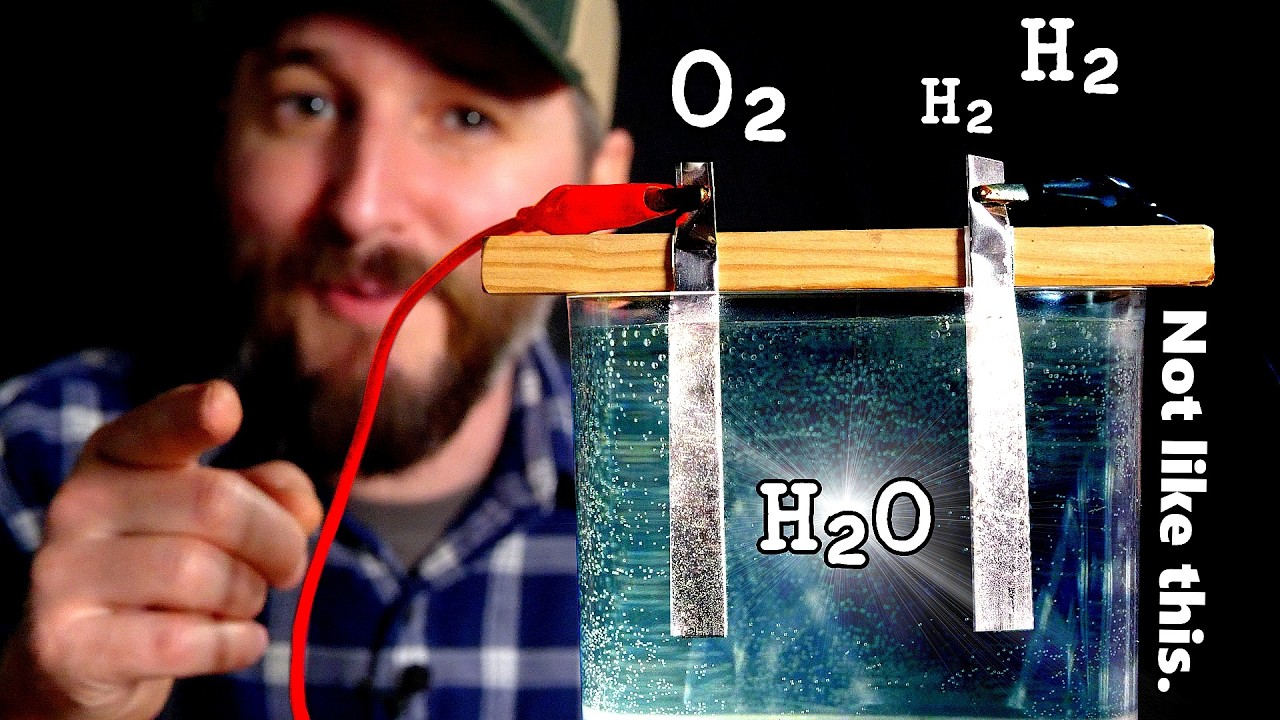
He lost me when he said the cathode was negatively charged and the anion was positively charged… It’s the other way around, right?
In my mind, cat- means positive and an- means negative. This isn’t the mandela effect, right?
A cation is a positively charged ion with fewer electrons than protons[2] (e.g. K+ (potassium ion)) while an anion is a negatively charged ion with more electrons than protons[3] (e.g. Cl− (chloride ion) and OH− (hydroxide ion)).
From wikipedia article on ions.
However, their anode article is nore cagey:
An anode usually is an electrode of a polarized electrical device through which conventional current enters the device. This contrasts with a cathode, which is usually an electrode of the device through which conventional current leaves the device. A common mnemonic is ACID, for anode current into device.[1] The direction of conventional current (the flow of positive charges) in a circuit is opposite to the direction of electron flow, so (negatively charged) electrons flow from the anode of a galvanic cell, into an outside or external circuit connected to the cell. For example, the end of a household battery marked with a + is the cathode (while discharging).
So the + side is the cathode only when discharging?
And then here on the electrolysis page of wikipedia, they have labeled the positive side Anode and the negative side cathode.??

Illustration of a Hofmann electrolysis apparatus used in a school laboratory
Does it seem crazy to anyone else that cathode and anode are not always the same as cation and anion, and flip meanings when charging or discharging?
Is there a way for this to make sense?
What is this “Charge into device” language?
Ah ok i just needed to read a little bit further on the anode article. The anode is where the oxidation reaction occurs, and the cathode is where the reduction reaction occurs…
In both a galvanic cell and an electrolytic cell, the anode is the electrode at which the oxidation reaction occurs. In a galvanic cell, the anode is the wire or plate having excess negative charge as a result of the oxidation reaction. In an electrolytic cell, the anode is the wire or plate upon which excess positive charge is imposed.[2] As a result of this, anions will tend to move towards the anode, where they will undergo oxidation.
I suppose even in a dry cell or circuit with no chemical reactions, they still keep the name. Like i don’t think there’s redox chemistry in a cathode ray tube…
God damn.
This is an excellent video on electrolysis. I love how gets into more advanced uses other than generating hydrogen. Electroplating, battery technology, etc. So many uses!
also permanent hair removal
Ben is fantastic. I’ll be trying his waterproof cardboard later this fall.

