I mean he’s right, you can’t answer the questions they ask completely truthfully. They will consider you a risk to yourself. Then you get your rights removed.
When suicide is one of the only ways we have control over our experience, I’m not sure why it’s so shocking that someone would think about it daily.
I mean he’s right, you can’t answer the questions they ask completely truthfully.
Honestly: If you are able to make a therapist appointment by yourself, the likelihood you pose such a high risk to yourself that you will be involuntarily committed seems rather low. I mean:
You are functioning sufficiently to get through all the barriers put in your way to see a therapist
You clearly care about your mental health
You are able to think rationally
Passive suicidal ideation (e.g. thinking about suicide regularly) sucks but it’s largely harmless in the short to medium term. And that’s what involuntary commitment focuses on. Like, you’re not going to be strapped down on a hospital bed because you said you don’t go to the doctor for preventative care, even though it’s deadly in the long-term.


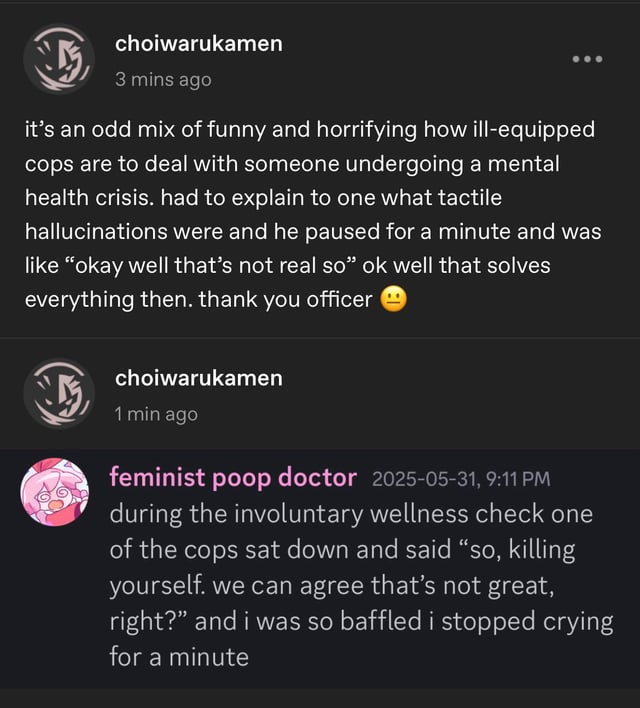
I mean he’s right, you can’t answer the questions they ask completely truthfully. They will consider you a risk to yourself. Then you get your rights removed.
When suicide is one of the only ways we have control over our experience, I’m not sure why it’s so shocking that someone would think about it daily.
Can’t even talk about it.
Honestly: If you are able to make a therapist appointment by yourself, the likelihood you pose such a high risk to yourself that you will be involuntarily committed seems rather low. I mean:
Passive suicidal ideation (e.g. thinking about suicide regularly) sucks but it’s largely harmless in the short to medium term. And that’s what involuntary commitment focuses on. Like, you’re not going to be strapped down on a hospital bed because you said you don’t go to the doctor for preventative care, even though it’s deadly in the long-term.