

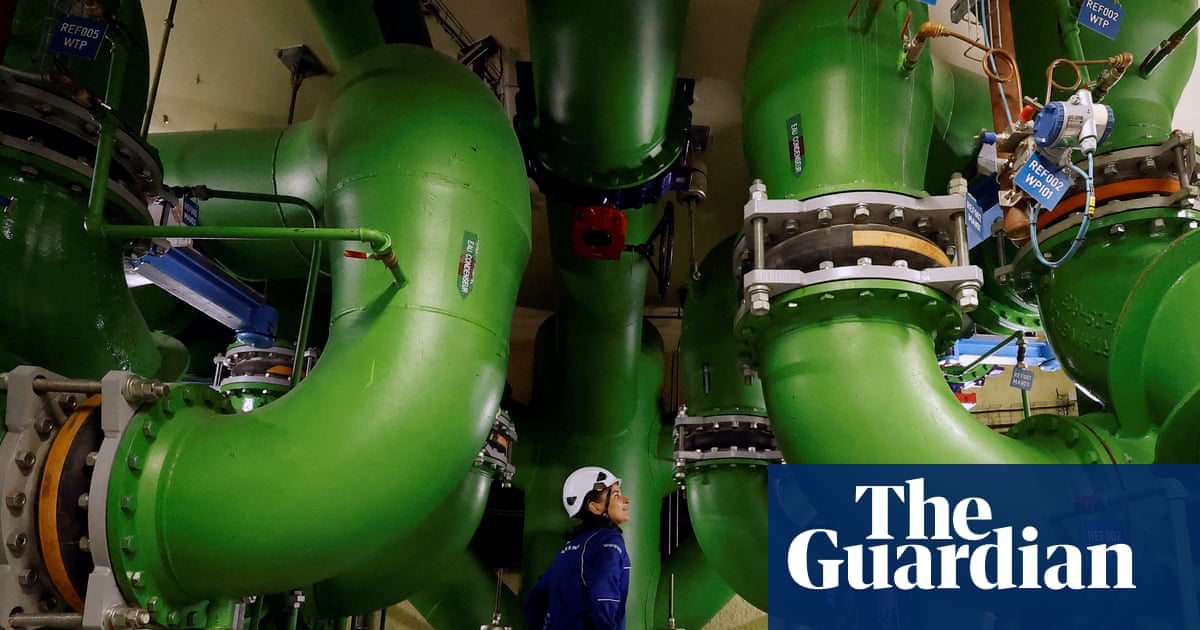
As heatwaves intensify across Europe, most cities are reaching for a familiar fix of more air conditioning. But in 1990s Paris, planning began for a different kind of solution: one of the world’s largest district cooling networks.
The system has 120kms (75-miles) of underground pipes distributing chilled water to museums, offices, hospitals, schools and other public buildings including the Louvre, the Grand Palais, and some luxury hotels and office districts. Instead of thousands of individual air-conditioning units, cooling is produced centrally and shared across the city like a utility.
The system circulates cold water through a network of pipes: cold river water from the Seine is pumped through one pipe, which runs right next to a secondary pipe carrying warm water from the city’s buildings. A thin metal wall separates them and a heat exchanger allows the heat from the warm city water to enter the cold Seine water without the fluids ever touching. It is similar to holding a cup of hot tea in a bowl of cold water – the liquids don’t touch, but the tea cools down
Not just the volume or the mass, either. The specific heat of water is so high that a kg of water can absorb 4.184 kJ for each degree Celsius. Air is about 1 kJ kg/°C, but also is about 1/900 the density at normal sea level temperature and pressure. So assuming some humidity, we’re talking 3500 liters of air being cooled by 1 liter of water, for each degree of temperature change of each.