

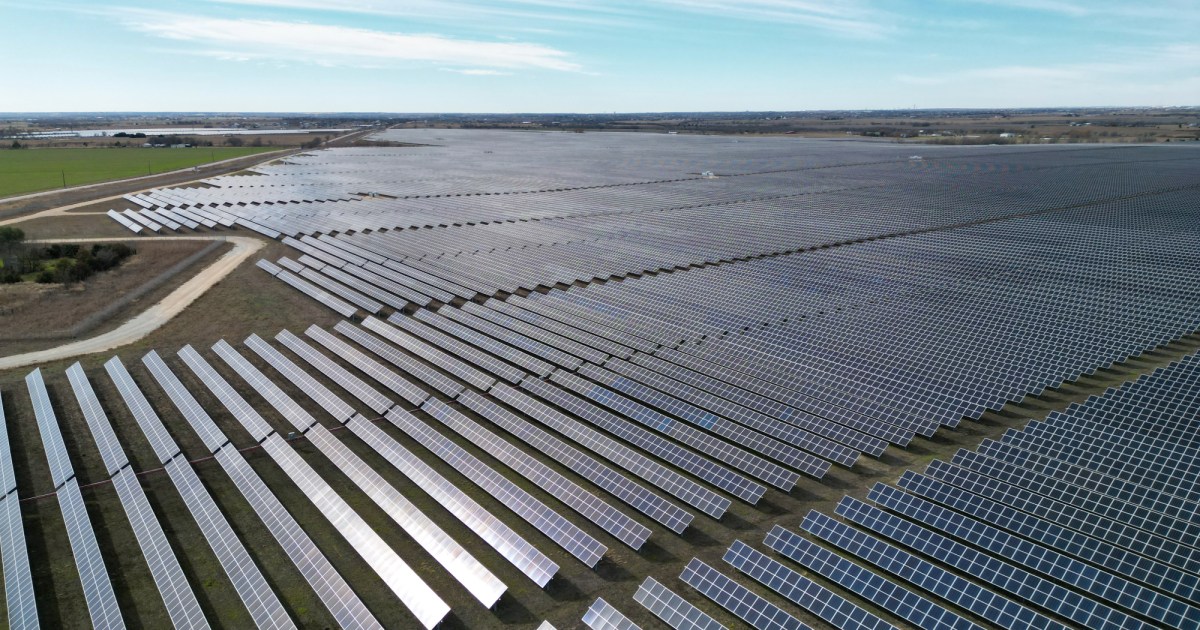
For the first time ever, solar is set to generate more electricity than coal in the power market managed by the Electric Reliability Council of Texas. Nobody is building new coal power plants in the state, but developers are adding more solar there than anywhere else in the country. As a result of those diverging trajectories, the federal government expects ERCOT will receive 78 billion kilowatt-hours from solar in 2026, and just 60 from coal.
This trend does have seasonal variations. Last year, solar output beat coal on a monthly basis from March through August, and this year it is expected to do so from March through December, per the US Energy Information Administration at the Department of Energy.
Did you know that during the 18th and 19th century industrial revolution in Britain, coal never became cheaper than water power? All those new steam engines were used to make deeper mines more viable and to increase production. But water power remained cheaper throughout. But water power came with a downside. Available water power tended to be located in rural areas. The smaller population in these small towns consequently had a lot of labor bargaining power. Industrialists instead wanted access to the labor markets of the major cities, cities brimming over with new urban poor desperate for any scrap of work they could get. Cheaper labor overcame cheaper power. A coal plant could be put anywhere, while a water mill could only be positioned on high-flowing streams.
Renewables are cheaper, but we’ve been here before. There’s more to this than just energy cost.
Do you have any source for that? I find it difficult to believe that the only reason for using steam over water mills was the dastardly exploitation by capitalists.
Water mills only produced a set amount of power that could be increased orders of magnitude by coal and steam.
This actually is the case. See Fossil Capital: The Rise of Steam Power and the Roots of Global Warming by Andreas Malm. I saw this argument featured in a video by “Our Changing Climate” that I can’t seem to locate now. But I believe this book was the main source for the video. Coal never actually dropped in price during the industrial revolution. The new tech was just used to expand production. And it makes sense when you consider that for these industrialists, labor and equipment costs were probably a much bigger part of their budget than the bill from their coal supplier. Even today, with all our automation, labor remains the biggest expense of most businesses. And it’s not like they just ran out of water mill capacity. They were still building dams in the UK well into the twentieth century. And ultimately, cheap urban labor combined with expensive coal power beat out expensive rural labor combined with cheap water power.
I have no reason to doubt that it was an element, but it seems to me that density of power and being able to place that power wherever it is needed (mines being a good example as you said) were likely a bigger consideration that just wanting to skimp on labour costs. If not why did steam power set off such an explosion of industrialisation?.
yeah, IIRC, in 2000, renewable oil from rape seed was still cheaper than fossil oil. however renewable oil was banned politically sothat there’s no food vs fuel debate tearing society apart. the question really is more complicated than simply the cost.
that being said, solar panels can be put anywhere, including near big cities, and transporting electricity over distances has also gotten easier in the last 200 years, so that’s not an argument for coal anymore.