

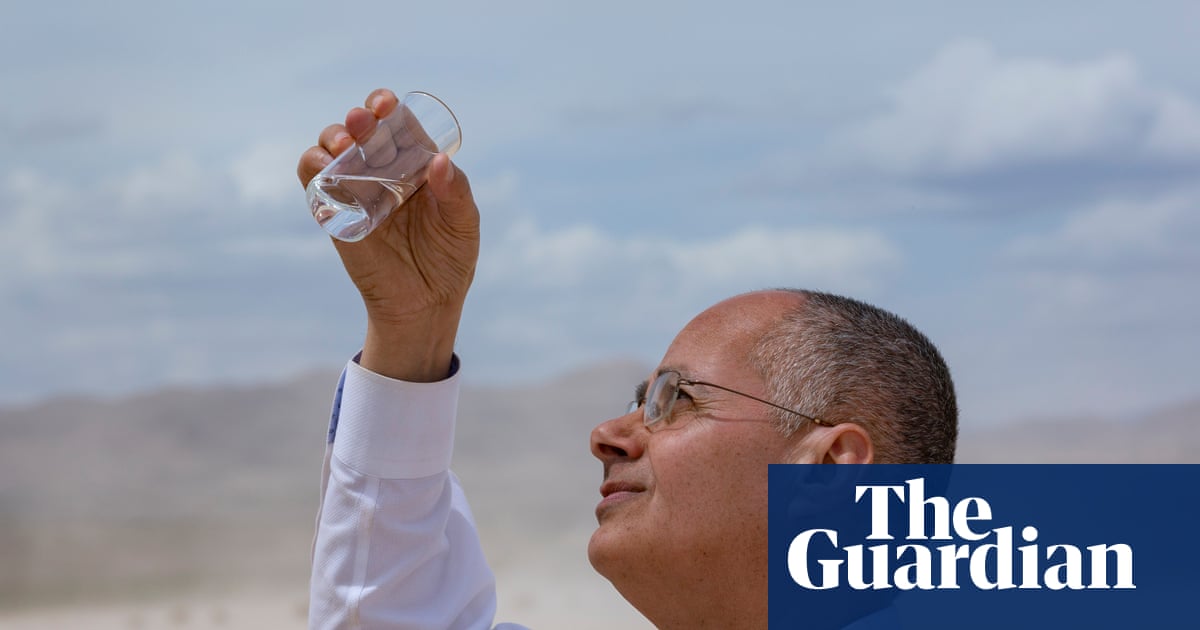
A Nobel laureate’s environmentally friendly invention that provides clean water if central supplies are knocked out by a hurricane or drought, could be a life saver for vulnerable islands, its founder says.
The invention, by the chemist Prof Omar Yaghi, uses a type of science called reticular chemistry to create molecularly engineered materials, which can extract moisture from the air and harvest water even in arid and desert conditions.
Atoco, a technology company that Yaghi founded, said their units, comparable in size to a 20-foot shipping container and powered entirely by ultra-low-grade thermal energy, could be placed in local communities to generate up to 1,000 litres of clean water every day, even if centralised electricity and water sources are interrupted by drought or storm damage.
Yaghi, who won the 2025 Nobel prize award in chemistry, said the invention would change the world and benefit islands in the Caribbean, which are prone to drought. He added that it could be a solution for countries needing to get water to marooned communities after hurricanes such as Beryl and Melissa, which left thousands without water.
So basically they’ve used fancy chemistry to make a better dehumidifier. “Dry air” is still around 20% humidity according to their website.
Overall, there’s just not a lot of moisture in the air for these types of systems to squeeze out. I’d be interested to see a cost/benefit analysis compared to just delivering water from somewhere else in an emergency.
And it is not clear what exactly is new
There’s a long list of technologies that do the same thing here https://en.wikipedia.org/wiki/Atmospheric_water_generator
deleted by creator