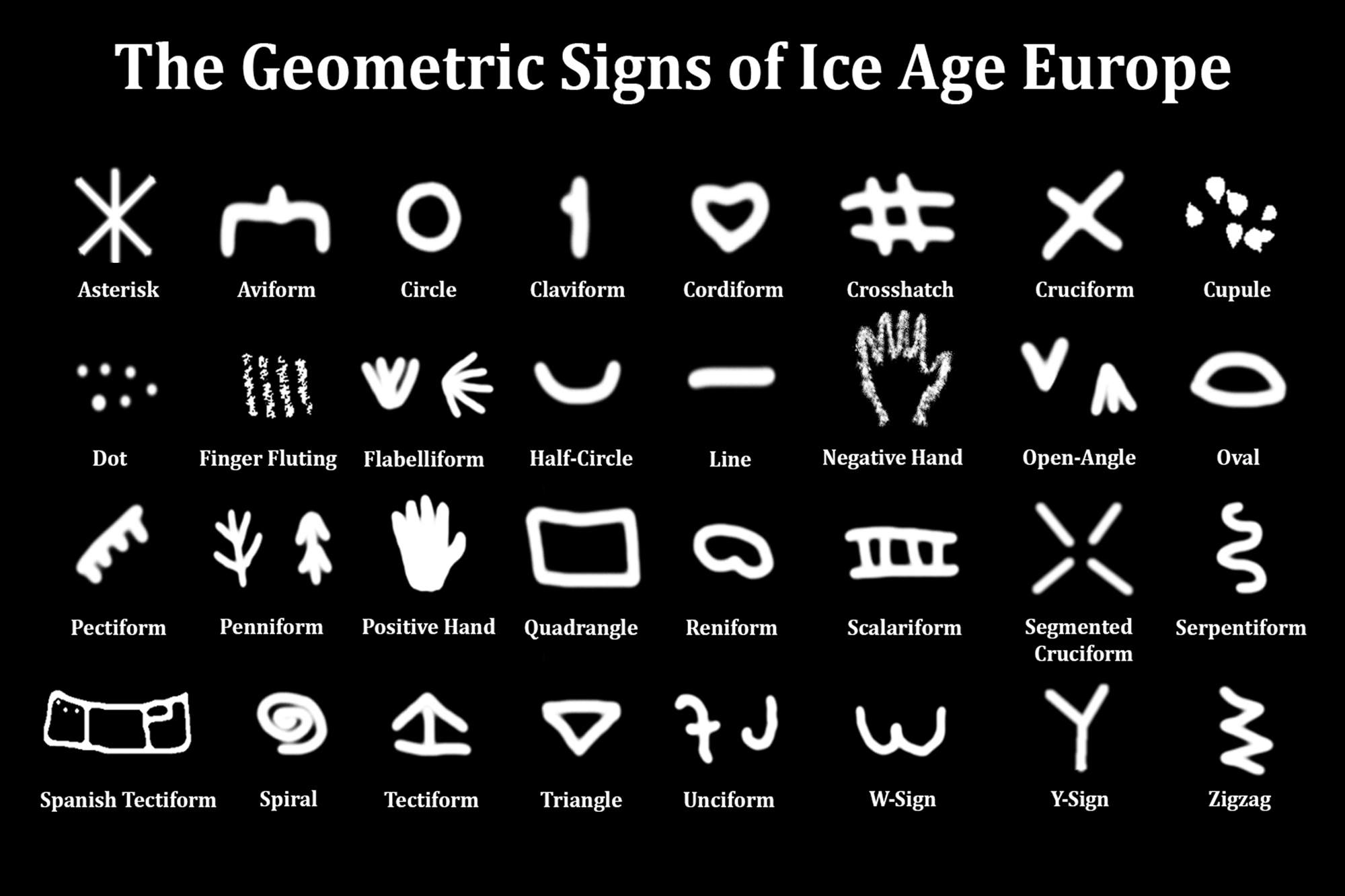
The 32 signs that von Petzinger has catalogued in Ice Age cave art across Europe. They account for the vast majority of non-figurative imagery found across the continent during this 30,000-year time span, suggesting that they were used with purpose and were meaningful to their creators. Each of the 32 signs has their own distinct pattern of use. Courtesy Genevieve von Petzinger.
You must log in or register to comment.
This reminds me hobo code, sets of symbols allegedly used by some types of travellers (mostly hobos and beggars) to tell their peers “if you ask food here they’ll give you some”, or “don’t come close, danger”. I say “allegedly” because I’m not sure if those systems are actually used, or if someone made this up.
Perhaps this is a pre-writing take of the same idea? As in: “good place to rest”, “be careful of the local fauna”, etc.
It feels a bit like the last three got less thought put in their names. Like the w-Sign should be named buttiform or something
“Natiform” (butt-shaped), “trifurcation” and “boustrophedic”?
@Innerworld Also curiously appearing around the world. https://www.newscientist.com/article/mg23230990-700-in-search-of-the-very-first-coded-symbols/
Anyway it’s an octothorpe