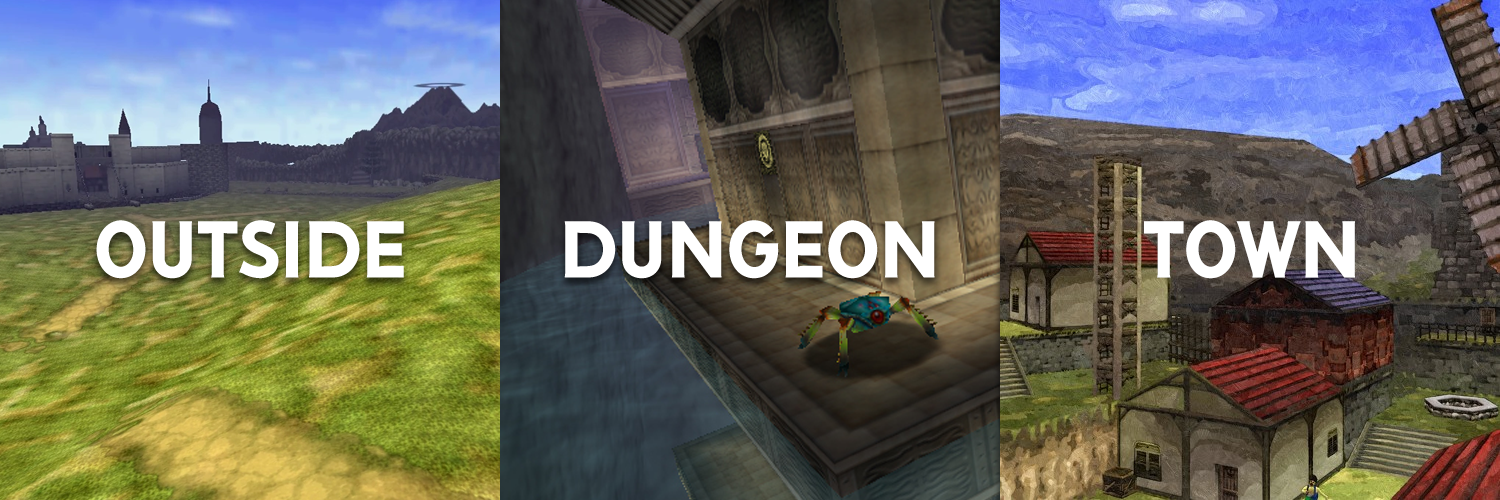
Videogames, at least the kind I’m talking about (RPGs, adventure kinds of somewhat narrative videogames, Zelda games, Elden Ring, etc), have essentially three “places”: Outside &#…
I’ve been playing some of the old Might and Magic games lately, and while certainly there are straight examples of all three, I think they offer interesting examples of blurring the lines.
In most of them, towns aren’t completely safe zones. There are often baddies in town for you to clear out, and sections of town that lead to or serve as mini-dungeons which you can easily stumble into just by kicking the wrong board or opening the wrong door. Sometimes there are also NPCs providing vital town services, who you can only find in a dungeon.
In MM7, in the last act you choose to follow Light or Dark. The opposite town essentially becomes a large open-air dungeon for you, but still has all the trappings of a regular town.


I’ve been playing some of the old Might and Magic games lately, and while certainly there are straight examples of all three, I think they offer interesting examples of blurring the lines.
In most of them, towns aren’t completely safe zones. There are often baddies in town for you to clear out, and sections of town that lead to or serve as mini-dungeons which you can easily stumble into just by kicking the wrong board or opening the wrong door. Sometimes there are also NPCs providing vital town services, who you can only find in a dungeon.
In MM7, in the last act you choose to follow Light or Dark. The opposite town essentially becomes a large open-air dungeon for you, but still has all the trappings of a regular town.